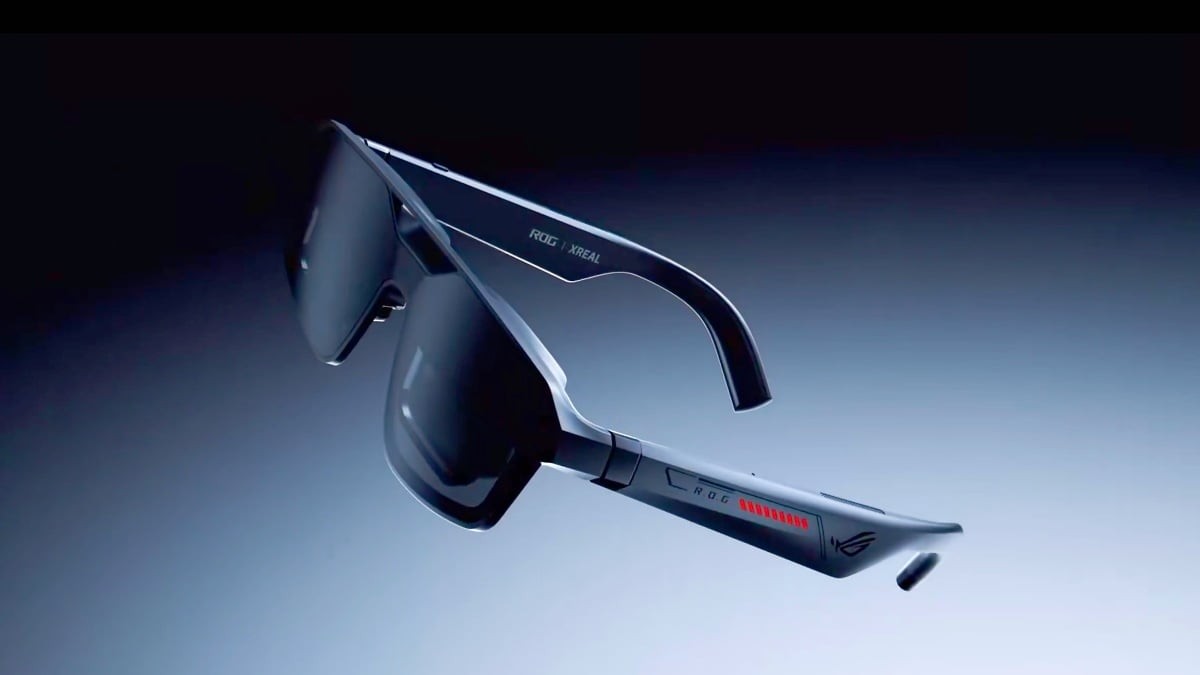
Xreal has reaffirmed its position as a leader in augmented reality (AR) glasses at CES 2026, responding to growing competition with a pair of new devices: the Xreal 1S and the ROG Xreal R1. While the smart glasses market is becoming crowded, Xreal is pushing the boundaries of both performance and convenience, offering features competitors can’t match.
New Hardware: Xreal 1S and ROG R1
The Xreal 1S is an upgraded version of the original Xreal glasses, now available for $449 – a price reduction that makes it more accessible. However, the real attention-grabber is the ROG Xreal R1, which Xreal claims is the first micro-LED smart glass with a 240 Hz refresh rate. This exceeds the capabilities of high-end competitors like Apple’s Vision Pro, which caps at 120 Hz.
The R1 is not just about speed; it also includes a dedicated dock for connecting to PCs, consoles, handhelds, Android, and iOS devices via USB-C. This setup makes the R1 slightly less mobile but provides a stable connection for high-performance gaming.
Key Specifications: ROG Xreal R1
- Display: 240Hz 1080p micro-OLED panels
- Resolution: 1920 x 1080
- Display Size: 171-inch equivalent at 4 meters distance
- Field of View: 57 degrees
- Weight: 91 grams
- Audio: Bose-powered spatial sound
- Features: Electrochromic lenses, ROG Control Dock included
Real 3D Conversion: Instant Spatialization
Xreal is also introducing “Real 3D,” an instant 2D-to-3D conversion feature available as a free over-the-air update for both the 1S and existing Xreal One Pro glasses. This technology transforms photos, videos, games, and entertainment content into 3D with no noticeable delay, a significant advantage over similar features in Apple Vision Pro and Samsung Galaxy XR.
During testing at CES, the Real 3D feature delivered surprisingly realistic results, rendering desktop backgrounds and 4K videos with impressive depth. The conversion is powered by Xreal’s proprietary X1 spatial computing chip, making it a seamless and immediate experience.
Why This Matters
The advancements from Xreal highlight a critical shift in the AR market: performance is no longer solely about resolution but also about responsiveness and practicality. The 240 Hz refresh rate of the R1 glasses eliminates motion blur, providing a smoother gaming and entertainment experience. The Real 3D feature reduces friction by making 3D spatialization effortless.
Xreal isn’t competing on price; it’s betting on quality and innovation. The ROG R1, while likely expensive, demonstrates that the company is willing to push boundaries rather than chase the lowest price point. This approach may appeal to enthusiasts and gamers who prioritize cutting-edge technology over affordability.
In conclusion, Xreal’s latest offerings at CES 2026 solidify its position as a frontrunner in the AR market. The ROG R1 and Real 3D feature represent not just incremental improvements but a leap forward in spatial computing, delivering a glimpse into the future of immersive entertainment and productivity.