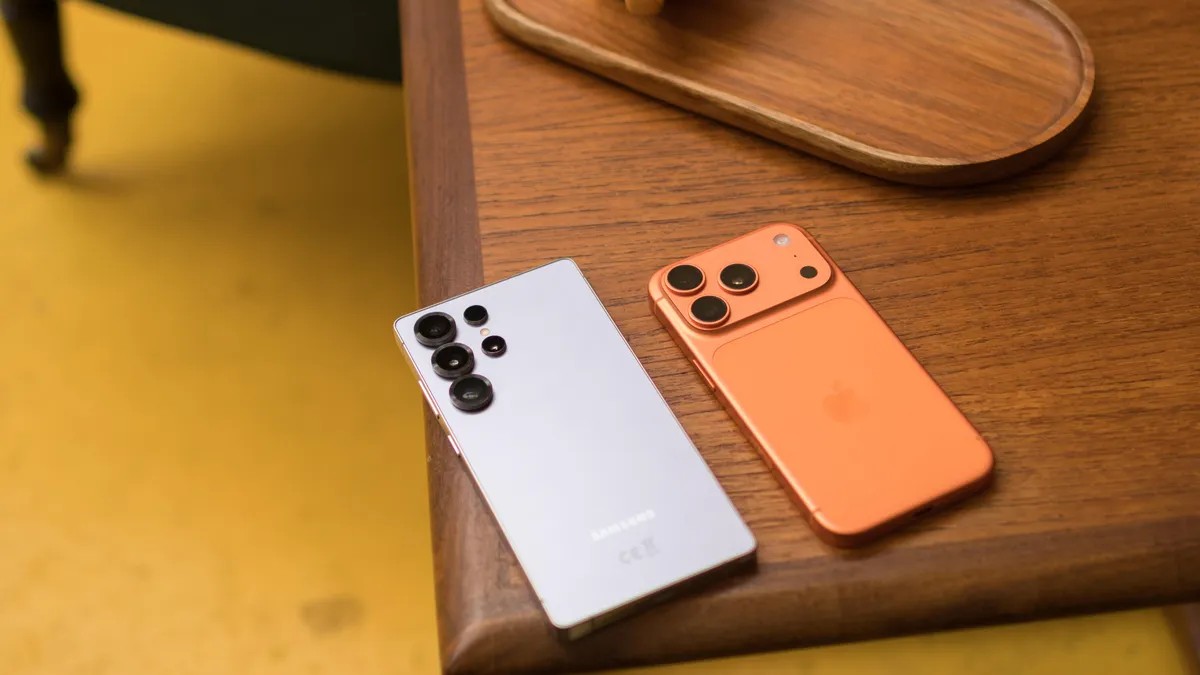
The latest flagship smartphones from Apple and Samsung—the iPhone 17 Pro and Galaxy S25 Ultra—both boast top-tier camera systems designed to compete with the best in the market. This comparison isn’t about declaring a definitive winner, but rather providing a detailed look at how these two powerhouses stack up across various shooting scenarios, because at this level, the choice often boils down to user preference.
Testing Methodology and Approach
To assess camera quality, a rigorous series of tests were conducted in Edinburgh, covering daylight, low-light, zoom, and selfie scenarios. All photos were taken using each phone’s standard camera app in JPEG (or HEIF for iPhone) format and lightly processed in Adobe Lightroom for resizing only—no additional edits or sharpening were applied. This ensures the comparison reflects the devices’ raw output as closely as possible.
Main Camera Performance: Color and Detail
In typical daylight conditions, both phones deliver exceptional image quality. The Galaxy S25 Ultra tends to lean towards more saturated, vibrant colors, making images pop immediately. The iPhone 17 Pro, in contrast, favors a more natural color profile with richer contrast, providing a solid baseline for post-processing.
For example, food photography sees the S25 Ultra delivering punchier colors, while the iPhone maintains a more realistic representation. In autumn landscapes, the iPhone offers deeper black levels and richer contrast, but the differences are subtle. When it comes to close-up shots, both phones perform admirably, with the iPhone’s bokeh (background blur) appearing slightly smoother in some cases.
However, inconsistencies emerge when shooting scenes with complex lighting. The S25 Ultra often over-saturates colors to the point of looking artificial, while the iPhone maintains a more filmic aesthetic. This is a matter of taste, but demonstrates how each phone prioritizes different visual styles.
Zoom Capabilities: A Mixed Bag
Both devices offer impressive zoom capabilities, with the iPhone’s optical zoom reaching 8x (through a processed crop of its 48MP sensor) and the S25 Ultra extending slightly further to 10x. The key difference lies in consistency.
At lower zoom levels (4x/5x), both phones produce excellent results. However, the S25 Ultra’s color accuracy degrades more noticeably at higher magnifications, occasionally exhibiting magenta shifts and dull tones. The iPhone maintains better contrast and warmer tones, though it may occasionally lean towards cyan in certain scenarios.
The inconsistency in the S25 Ultra’s zoom performance is a notable drawback; while it’s still technically sound, the iPhone’s more stable output makes it the more reliable choice for critical zoom shots.
Low-Light Performance: Clarity vs. Color
In low-light conditions, the Galaxy S25 Ultra excels in clarity and sharpness. Its images retain more detail in dark areas, while the iPhone prioritizes brighter, more colorful output. The trade-off is noticeable: the S25 Ultra’s darker shots may lack vibrancy, while the iPhone’s brighter images can appear slightly overexposed.
At higher zoom levels in night mode, the S25 Ultra continues to produce sharper images, although the iPhone’s color reproduction remains superior. The ultrawide night mode still requires improvement on both devices, with both phones struggling to capture detailed, noise-free shots in extremely low light.
Selfie Camera: iPhone Takes the Lead
The front-facing cameras show a clear winner: the iPhone 17 Pro consistently delivers brighter, more colorful, and detailed selfies. The S25 Ultra’s front camera appears drab in comparison, lacking the same level of contrast and vibrancy. The iPhone also offers a wider field of view in wide-angle selfie mode, making it more versatile for group shots.
Final Verdict: Preference Reigns Supreme
After extensive testing, the conclusion is simple: neither the iPhone 17 Pro nor the Galaxy S25 Ultra is objectively better. Both phones are capable of producing stunning photos, but they cater to different preferences.
The Galaxy S25 Ultra favors vibrant, saturated colors and excels in low-light sharpness, making it ideal for users who prefer bold, ready-to-share images. The iPhone 17 Pro prioritizes natural tones, consistent zoom performance, and superior selfie quality, appealing to photographers who value accuracy and post-processing flexibility. Ultimately, the best camera phone for you depends on your personal style and priorities.