Google Maps is evolving from a simple map application into a voice-activated driving assistant, thanks to the integration of Gemini AI. The update, rolling out to over 2 billion users worldwide, aims to make navigation more hands-free, intuitive, and safer, addressing common pain points for drivers.
Hands-Free Navigation with Conversational AI
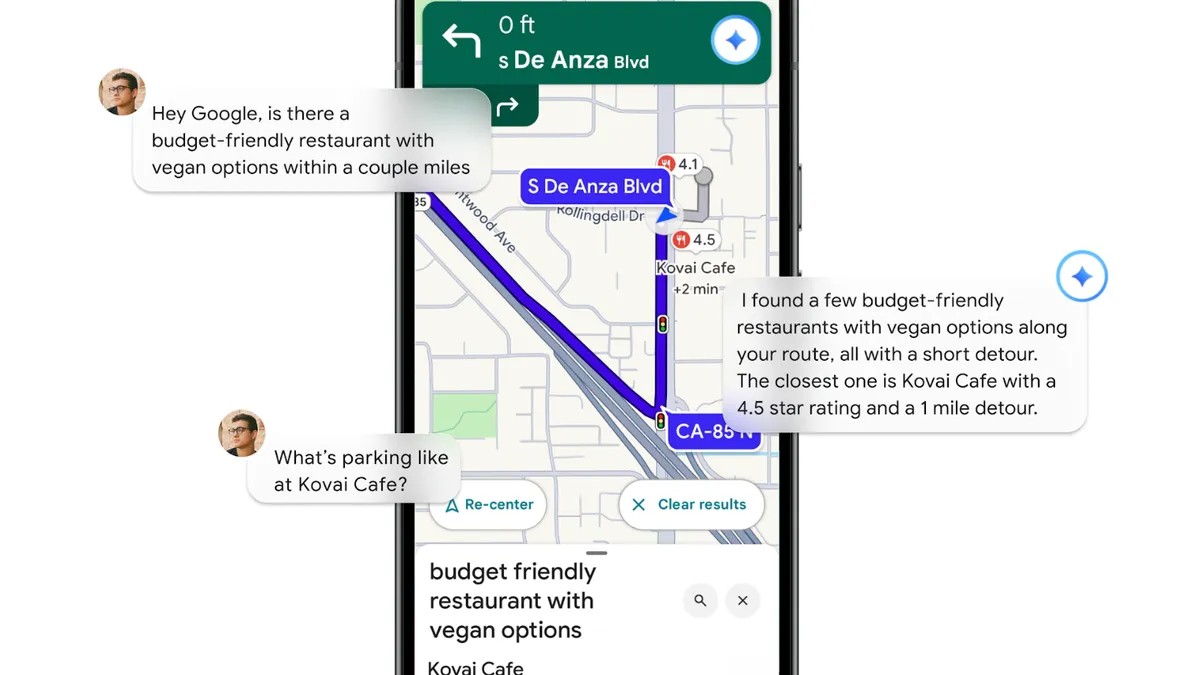
The core change lies in Gemini’s conversational mode. Drivers can now ask detailed questions like “Find a vegan-friendly restaurant with parking nearby” without typing or tapping. The AI doesn’t just respond; it follows up on requests, such as adding calendar reminders or checking EV charger availability along the route. On Android, users can even share their ETA via voice command.
This is a significant improvement because it directly addresses the dangerous habit of drivers interacting with their phones while behind the wheel. The new feature allows for natural, hands-free control, reducing distraction and potentially improving road safety.
Real-Time Traffic and Hazard Reporting
Google Maps will soon allow drivers to report real-time conditions using voice commands. Saying “There’s an accident ahead” or “Flooding on this road” instantly adds safety alerts for other users on that route. This crowdsourced approach to hazard reporting could dramatically improve traffic awareness and reduce delays.
Landmark-Based Directions for Clarity
Instead of generic prompts like “Turn right in 500 feet,” Gemini now references real-world landmarks: “Turn right after the Thai Siam Restaurant” or “Turn left before the stop light.” This change leverages Google’s database of 250 million mapped places and Street View imagery to provide clearer, more relatable directions.
The logic here is simple: people navigate better when they understand where they’re going, not just how to get there. Landmark-based directions bridge the gap between abstract instructions and the real world.
Proactive Traffic Alerts and Destination Exploration
Google Maps will also proactively notify users about road closures or major traffic disruptions even when navigation isn’t active. This feature, initially available in the US on Android, allows drivers to reroute before getting stuck.
At the destination, an upgraded Lens feature lets users point their camera at buildings to instantly identify them, read reviews, and get AI-generated summaries. Asking “What’s this place known for?” or “Is it usually busy?” provides instant insights from Google’s location data and user feedback.
The Future of In-Car Assistance
Gemini’s integration transforms Google Maps into a more powerful voice-first navigation assistant. The AI’s ability to handle complex queries, manage tasks, and describe surroundings could make commutes and road trips less stressful and safer. The update is rolling out in phases, starting with Android and iOS in the US, followed by Android Auto support.
By merging AI with mapping technology, Google is positioning Maps not just as a tool for finding locations but as a co-pilot for every journey. This shift towards proactive assistance promises a more seamless and intuitive driving experience.