


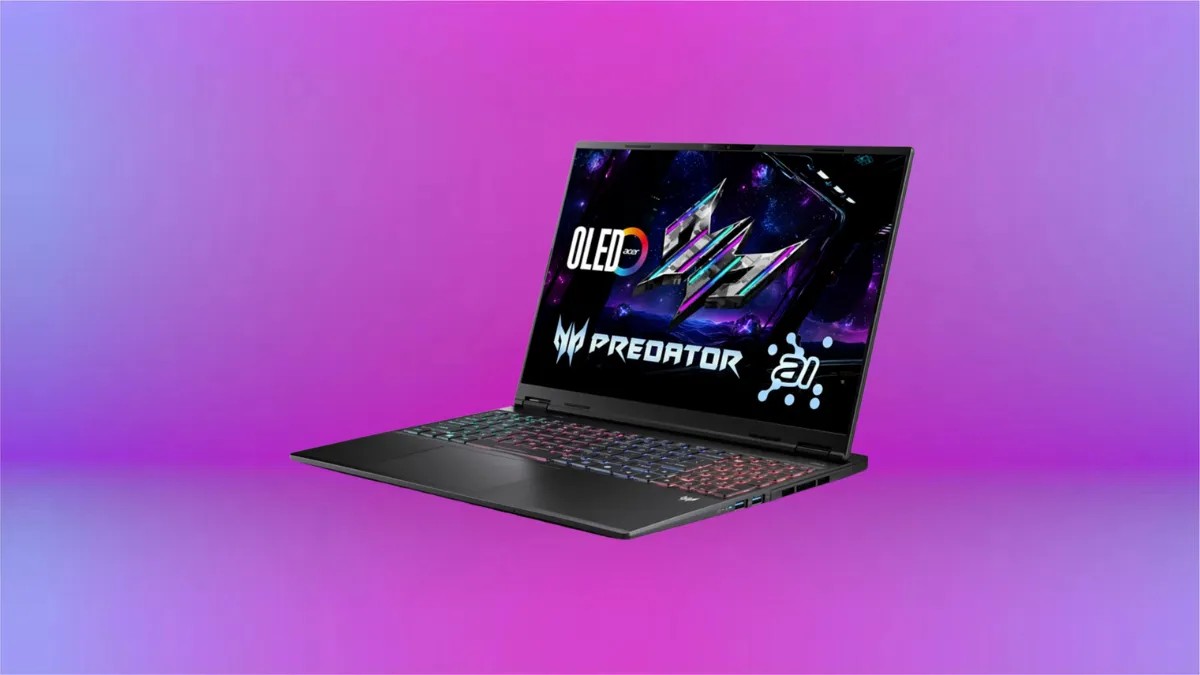
Acer’s Predator Helios Neo 16S AI is making waves in the high-performance gaming laptop market, offering a compelling combination of power and portability. While competing with established brands like Razer and Alienware, this machine delivers impressive specs at a competitive price point — often under $2,000, and frequently discounted to $1,500–$1,600. This review breaks down what makes the Helios Neo 16S AI stand out, where it compromises, and whether it’s the right choice for you.
Performance That Delivers
At the heart of the Helios Neo 16S AI is an Intel Core Ultra 9 processor paired with an Nvidia RTX 5070 Ti GPU. This combination handled every test thrown at it without issue, matching and frequently exceeding the performance of rivals in its class. In practical terms, that means smooth gameplay at high settings, with titles like Guardians of the Galaxy hitting 177 fps and Shadow of the Tomb Raider reaching 219 fps.
However, Acer has capped the GPU at 115W, blocking overclocking via Nvidia’s Dynamic Boost. This limitation is likely a cost-saving measure given the powerful Core Ultra 9 processor, but it doesn’t significantly impact performance in most games. The CPU itself provides a substantial boost not just for gaming, but also for demanding tasks like video editing and AI workloads.
Design and Build Quality: Subtle Yet Functional
Unlike many gaming laptops that scream “gamer” with aggressive aesthetics, the Helios Neo 16S AI adopts a more subdued design. Closed, it could pass for a standard laptop, lacking the over-the-top angles and excessive flairs common in this category. At 1.01 inches thick and featuring an aluminum top, it feels relatively premium.
The rest of the chassis is plastic, and it shows fingerprints easily. The keyboard includes a full-size numpad and offers a surprisingly pleasant typing experience, though it’s not ideal for marathon gaming sessions. Four customizable RGB zones provide some personalization options.
Despite its slim profile, the laptop remains fairly large at 14 x 10.8 inches, making it a tight fit in some backpacks. Weighing 4.8 pounds without the charger, it’s also not particularly lightweight, but that’s typical for a gaming laptop.
Upgradeability and Pricing
One of the Neo 16S AI’s strongest points is its upgradeability. Unlike many competitors, neither the RAM nor the SSD is soldered down. Removing the bottom panel (with 10 screws) reveals two slots for both, allowing users to expand storage or memory as needed. The processor can technically support up to 256GB of RAM, though that’s overkill for most gamers.
Currently, two configurations are available: a base model with an RTX 5060 and 16GB of RAM ($1,600) and a higher-end version with the RTX 5070 Ti and 32GB of RAM ($1,900). Frequent discounts bring the top-end model down to $1,600, making it an even more compelling value. Both models are exclusive to Best Buy.
Display and Other Features
The 16-inch OLED display is a standout feature, boasting a 2,560×1,600 resolution, a 240Hz refresh rate, and HDR support. Nvidia’s G-Sync and Advanced Optimus integration further enhance the visual experience. Colors appear saturated at lower brightness levels, but the 5070 Ti GPU balances them out nicely.
However, the webcam is underwhelming, delivering grainy 1080p footage that’s barely passable for video calls. Battery life is also shockingly short, clocking in at under two hours in our video streaming test. This is a common trade-off for high-performance gaming laptops, but it’s still a significant limitation.
Minor Quirks and Bugs
The Helios Neo 16S AI isn’t without its flaws. The cooling fans are loud, even under moderate workloads, and kick on frequently. Several times during testing, the laptop froze and required a restart. It also woke from sleep unexpectedly while connected to an external monitor. These issues may be related to Windows rather than the laptop itself, but they’re worth noting.
The Acer Predator Helios Neo 16S AI is a solid gaming laptop that balances power, portability, and affordability. While the short battery life and loud fans may annoy some users, the strong performance, upgradeability, and competitive pricing make it a worthwhile choice for gamers who want a high-end experience without breaking the bank.


