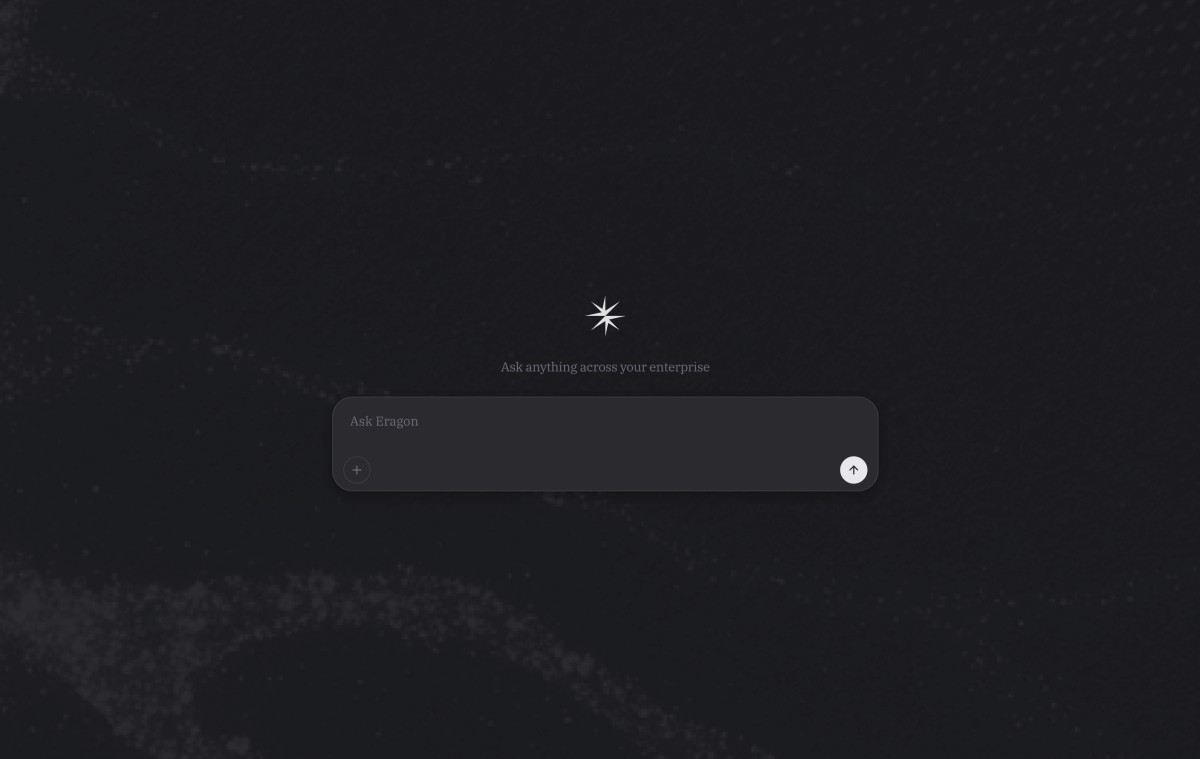
A new startup, Eragon, is betting that the future of business software isn’t about interfaces — it’s about prompts. Founded in August 2023, the company just secured $12 million in funding to build an AI operating system for enterprise clients, with a valuation of $100 million. The core idea: traditional software, with its buttons and menus, is obsolete. Instead, business will be conducted entirely through natural language prompts to large language models (LLMs).
The Death of the Interface?
Eragon’s founder, Josh Sirota, draws on experience implementing software at Oracle and Salesforce to argue that the existing model is broken. His company aims to offer enterprise software suites—including tools like Salesforce, Snowflake, Tableau, and Jira—through an LLM interface.
Sirota envisions a system where users simply ask for what they need, rather than navigating complex menus. Need a dashboard? Just prompt Eragon to create one. Want to analyze potential deal losses? Ask the AI to provide an assessment and assign agents to act on it. The demo is compelling, but also raises questions about handling edge cases and ensuring auditability.
Data Security and Ownership
A key differentiator for Eragon is its focus on data security. Unlike relying on external AI APIs, Eragon trains models on customer datasets within their existing security environments. This means companies retain ownership of their data and model weights, avoiding the risks of sharing sensitive information with third parties.
This approach addresses a critical concern in enterprise AI adoption: companies want the benefits of AI without sacrificing control over their data. Eragon’s pitch centers on keeping everything local, allowing businesses to deploy models trained on years of proprietary data as valuable, owned assets.
The Future of Work: Agentic AI
Eragon isn’t alone in this vision. Nvidia CEO Jensen Huang recently echoed the sentiment, stating that agentic AI tools will fundamentally reshape white-collar work. Huang’s initiative, NemoClaw, further validates the trend by making it easier to deploy secure, enterprise-grade AI agents.
The transition mirrors the shift from mainframes to personal computers: while powerful centralized AI services exist, mass adoption will depend on local, customizable tools. Companies will need bespoke AI agents and models tailored to their specific needs and want complete control over them.
“Most of the data we have needs to remain secure and behind our own cloud,” says Nico Laqua, CEO of Corgi. “Eragon trains state-of-the-art models for us on our data and deploys it in our own environment.”
Eragon is already in use by several large businesses and startups, positioning itself as a frontrunner in this emerging market. The competition will be fierce, but the direction is clear: the future of enterprise software is likely to be prompt-driven, secure, and fully owned by the companies using it.