Starcloud, a startup aiming to deploy data centers in space, has secured $170 million in Series A funding, bringing its total raised to $200 million. This investment values the company at $1.1 billion, marking a rapid ascent for the Y Combinator graduate. The move highlights growing interest in orbital computing as terrestrial expansion faces increasing logistical and political hurdles. However, the viability of this business model hinges on overcoming significant technological and financial challenges.
Orbital Infrastructure: A New Frontier
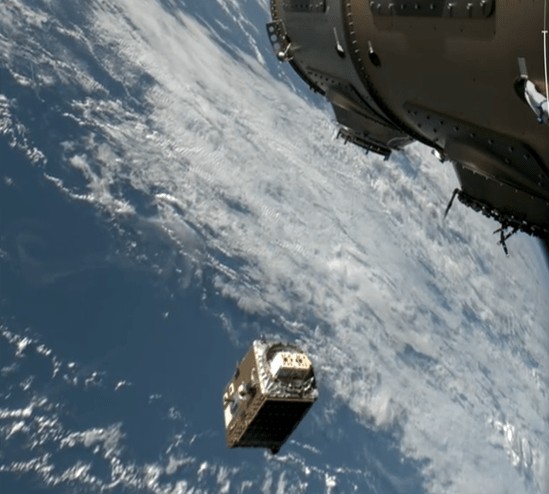
Starcloud has already launched its first satellite with an Nvidia H100 GPU in November 2025, demonstrating early capabilities. The company plans to deploy a more powerful Starcloud 2 later this year, featuring Nvidia Blackwell chips, AWS server blades, and even bitcoin mining hardware. The ultimate goal is Starcloud 3, a 200-kilowatt spacecraft designed for deployment via SpaceX’s Starship rocket.
This vision relies heavily on SpaceX delivering frequent, low-cost access to orbit. Currently, the cost remains prohibitive: CEO Philip Johnston estimates that orbital data centers won’t be competitive until launch costs drop to around $500 per kilogram, a scenario unlikely before 2028-2029. Until then, Starcloud will continue launching smaller versions on Falcon 9 rockets.
The Business of Space Computing
Starcloud’s strategy involves two primary revenue streams: selling processing power to other spacecraft, and eventually competing with terrestrial data centers once launch costs fall. The company has already proven the feasibility of running advanced GPUs in orbit, training an AI model in space for the first time and running a version of Gemini.
However, the industry remains in its infancy. Nvidia’s recent unveiling of its Vera Rubin Space-1 chip modules lacked concrete production details, and the number of advanced GPUs currently in orbit remains in the dozens, dwarfed by the millions sold for terrestrial use. Space-based energy production is also minuscule compared to the gigawatt-scale data centers being built on Earth.
Competition and Challenges
Starcloud isn’t alone in this endeavor. Companies like Aetherflux, Google’s Project Suncatcher, and Aethero are also developing space data center technologies. The biggest competitor remains SpaceX itself, which has sought approval for a million-satellite constellation for distributed computing.
Johnston believes Starcloud can coexist with SpaceX by focusing on infrastructure and energy provision, while SpaceX targets internal workloads for Grok and Tesla. Regardless, significant technical hurdles remain: efficient power generation, thermal management, and synchronizing distributed GPU clusters in orbit will require further innovation.
“If it ends up being delayed, we’ll just carry on launching the smaller versions on Falcon 9,” Johnston said. “We’re not going to be competitive on energy costs until Starship is flying frequently.”
The development of space data centers is an ambitious and long-term project. While Starcloud has made early progress, widespread adoption depends on the maturation of reusable launch systems and continued technological breakthroughs.
The race to bring computing power into orbit is underway, but the timeline for true cost-competitiveness remains uncertain.