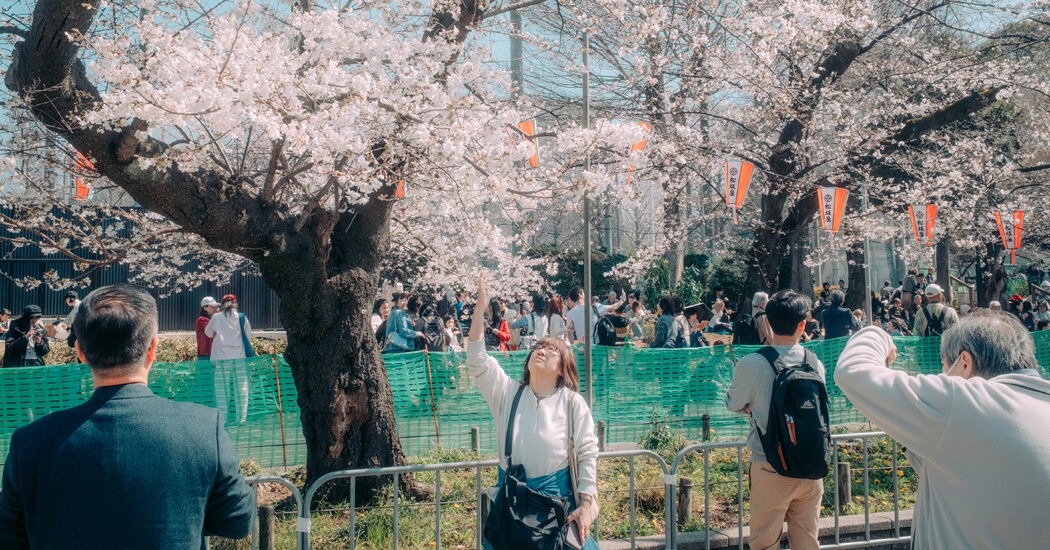
Japan’s iconic cherry blossom season — a multi-billion dollar economic driver and a deeply cherished cultural tradition — is now being forecast with the help of artificial intelligence. For decades, meteorologists have faced intense pressure to predict bloom dates accurately, as the timing dictates tourism, hospitality, and even national mood. This year, however, a new approach leveraging AI is promising more precise predictions than ever before.
The High Stakes of Cherry Blossom Forecasting
The timing of sakura (cherry blossom) season is critical. The bloom generates an estimated $9 billion in annual revenue for Japan through tourism and related industries. Airlines, hotels, and restaurants all rely on accurate forecasts to prepare for peak demand. Beyond the economic impact, the blossoms hold deep cultural significance for Japan’s 123 million residents, who eagerly anticipate the short-lived spectacle.
“It’s a lot of pressure; I feel the weight of history,” said Hiroki Ito, a data scientist at the Japan Meteorological Corporation. “I’m a little frightened of spring… I can’t fully enjoy it.”
How AI Is Changing the Game
Traditional forecasting methods are now being augmented with AI systems that analyze decades of historical temperature data. These systems deliver detailed bloom maps and “bloom meters” for over 1,000 locations across Japan, accounting for the varying bloom times in different regions.
Crucially, forecasters are also crowdsourcing real-time images from the public. These photos are fed into AI-powered databases that track the growth of buds, which develop in the summer, remain dormant through winter, and finally blossom within two to four weeks after turning green in spring. This combination of historical data and live observation allows for unprecedented accuracy.
Why This Matters
The shift toward AI-driven forecasting is significant because it acknowledges the increasing unpredictability of climate change. Traditional models struggle to account for sudden temperature shifts, which can drastically alter bloom times. AI’s ability to adapt to real-time data and identify subtle patterns offers a more reliable solution.
The integration of AI into cherry blossom forecasting represents a broader trend: the reliance on advanced technology to manage the impacts of a changing climate on cultural and economic pillars.
The stakes are high, but the tools are evolving to meet the challenge. Japan’s cherry blossom season is no longer just a beautiful spectacle – it’s now a test case for how AI can safeguard cultural traditions in the face of environmental uncertainty.