
Facebook might have been just another fleeting text-based blog network if it hadn’t embraced visual content. Instead, the platform became the internet’s largest archive of personal images. This visual shift changed everything. It turned a static social directory into a living, breathing memory bank.
For users, this means one critical skill: knowing how to tag someone on Facebook. It’s not just about naming faces. It’s about curating your digital footprint. But the process isn’t always manual anymore. Facebook uses facial recognition software to suggest tags automatically. This raises questions about privacy, accuracy, and control.
Let’s look at how tagging works today. We’ll break down the mechanics. We’ll also examine the technology behind the suggestions. And we’ll discuss how you can keep your data in check.
The Mechanics of Photo Tagging
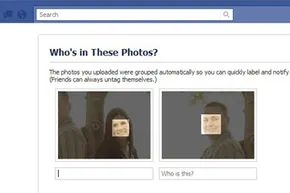
Tagging is the backbone of Facebook’s photo culture. It transforms a static image into a searchable network. When you upload a picture from a party or event, you can identify the people in it. You click on their faces. You type their names into the Who Is This? field.
This creates a clickable link. Months later, clicking that name brings up every other photo that person appears in. It’s a powerful organizational tool. Want to find every picture of your friend Brianna? Just click her name. The algorithm does the heavy lifting.
But manual tagging has a flaw. It’s tedious. If a photo contains ten friends, you have to click and type ten times. It breaks the flow. It discourages sharing.
Enter Tag Suggestions
Facebook addressed this friction by introducing Tag Suggestions. Early versions of this feature debuted around 2011. The goal was simple: speed.
Now, when you upload an image, Facebook doesn’t wait for you to guess. It offers up a pre-filled list. The system uses facial recognition technology to analyze the faces in the photo. It matches them against your friends’ profile pictures. Then, it populates the Who Is This? box with its best guesses.
It’s a convenience feature. But convenience comes with complexity. The software isn’t perfect. It makes mistakes. It assumes familiarity. And it operates in the background, often without explicit user intervention.
Why This Matters to You
Understanding how to tag someone on Facebook isn’t just about etiquette. It’s about data privacy. Every tag is a data point. It links your identity to specific locations, events, and people. It builds a profile of your life.
Facial recognition enhances this. It allows the platform to identify you even if you aren’t tagged. It scans photos where you appear. It suggests tags you might not have noticed. This raises important questions:
- Who controls the final tag?
- How accurate is the facial recognition?
- Can you opt out?
The technology offers benefits. It streamlines sharing. It helps you find old memories. But it also creates a surveillance layer. You need to know how it works to manage it effectively.
The Limitations of Automatic Tagging
Facial recognition is powerful, but it’s not infallible. It struggles with:
- Poor lighting
- Angles that obscure facial features
- Changes in appearance (glasses, weight loss, aging)
These limitations lead to errors. False positives are common. The system
Facebook’s photo tagging engine processes roughly 100 million new tags daily. It’s less a social game and more a data entry grind. You click faces. You type names. The system guesses your intent before you finish the keystroke. It works because people do it anyway.
Uploading an album triggers the Edit Photos interface. From here, you manage the metadata of your digital life. Set captions. Pick the album cover. Delete the blurry shots. Rearrange the timeline. But the core function remains linking identities to visual data.
Click a face. Type a name. Facebook’s auto-complete fills the rest. This speed is the entire value proposition. Without it, the friction would kill the behavior.
Tag Suggestions automate this further. After an upload, the system scans for faces. It highlights them on the Who’s In These Photos? page. You type a name. If that person is in your network, Facebook auto-completes the entry. Crucially, this tag applies to all other images where that face appears. One action, multiple records. It is efficient. It is also invasive.
Privacy Risks in Photo Tagging
A tag is a notification. Your friend gets alerted that their face is now indexed. They hold the power to remove that association. They can un-tag the photo. This severs the link between their account and the image.
But they cannot delete the image itself. If the photo is embarrassing, it stays. The public nature of the platform is the bottleneck. A friend can request removal for privacy violations, but that is a legalistic process, not a simple click. The social cost of posting humiliating content is high. Your friends remember. They might not act online, but they act in real life.
To remove a tag yourself, navigate to your profile. Select Photos. Scroll to the section labeled Photos and Videos of You. Open the specific image. Click Remove Tag below the image frame. The association disappears from your timeline.
You can also disable Tag Suggestions entirely. Go to the Account menu. Click Privacy Settings. Select Customize Settings. Navigate to Things Others Share. Find Suggest Photos of Me to Friends. Click Edit Settings. Choose Disabled. The system stops offering names. It stops guessing. It forces manual entry for every face.
How Facebook Face Recognition Works
The next step involves the underlying technology. Facebook does not just rely on manual input. It uses algorithms to identify faces. This face recognition technology maps facial features. It creates a digital fingerprint. It matches new images against existing data. This allows for the auto-suggestions mentioned earlier. The system learns who you are by watching who you interact with. It connects dots across millions of images. The accuracy is improving. The privacy implications are not.
“Tagging is a part-time job that never ends.”
The technology behind this is proprietary. It is not open source. It is not transparent. Users accept it because the convenience outweighs the risk. Most people do not check their privacy settings. They assume the system works as intended. They assume their friends are careful. They are not always right.
The result is a massive, searchable database of human faces. Every upload adds to it. Every tag refines it. The question is not whether it works. It is what happens when it works too well. You might want to know more about the specific algorithms involved. Or you might just want to stop the tags. The choice is yours. The system is ready.

Facial recognition isn’t a fresh invention. Police departments have been running these systems for years, building searchable databases of known criminals and suspected terrorists. It is invasive, yes, but it is also established.
Facebook never publicly named the specific developers behind its own recognition tool. However, the underlying technology mirrors what you already know from consumer software like Windows Live Photo Gallery, iPhoto, and Picasa. All of these programs offer similar facial tagging features.
If you’ve used a point-and-shoot digital camera in the last few years, you’ve likely seen this tech in action. Modern cameras often highlight faces with boxes. This signals that the auto-focus is locking onto those features to keep the image sharp. That is facial recognition working in real-time.
The same logic applies when you upload photos to social media. The Tag Suggestion feature scans your uploads. It finds faces. It prompts you to type a name. The catch? These suggestions only appear for people in your direct friend list. They do not extend to friends of friends.
How facial recognition software works
The magic relies on complicated algorithms. These are driven by hardcore mathematics and clever programming. The application analyzes every image for specific characteristics. It looks at pixel values. It tracks gradients—the way images transition from dark to light areas. It processes other numerically precise data points.
Next, it guesses which parts of the image correspond to a human face. That part is surprisingly dependable.
Matching a name to that face is where things get messy. Variables like lighting, facial hair, and expressions can fool the software. This is why Tag Suggestion often fails. It might confuse two friends. It might suggest the wrong name entirely.
For privacy-conscious users, the implications are unsettling. Imagine a stranger taking your photo from a distance. They feed that image into a search engine. Within minutes, they know who you are. They know where you live. They know a lot about you that you’d rather keep private.
Status update: no more facial recognition software
Fortunately, Facebook has shifted its stance.
Reacting to intense privacy concerns and tightening regulations, the company changed its course. It initiated policy reforms aimed at giving users more control. In some regions, it moved the facial recognition feature to an opt-in model. This gave users sovereignty over their biometric data.
Then came the big move.
In late 2021, Meta (Facebook’s parent company) announced the discontinuation of its facial recognition system. They committed to erasing the faceprints of over a billion users. This was a radical shift in how the company views digital identity. It signaled a move toward more responsible data practices under global scrutiny.
Promote safety on your Facebook app
Photos boost engagement. They drive activity in your comment section. But you should stay guarded.
Facebook administrators constantly tweak tagging and privacy settings. Keep up with these changes. Keep questionable images off the internet entirely. Doing so keeps you ahead of the curve. And safer.
This article was updated with AI technology, then fact-checked and edited by a HowStuffWorks editor.