Sergey Brin and Larry Page built Google on a simple premise: make information easy to find. But they soon hit a wall. The digital world was vast, yet it lacked the deep, analog history stored in physical books. Without digitizing those pages, online knowledge would always have a gaping hole. So, Google Print emerged. Today, it’s known as Google Books. The goal was aggressive: scan entire libraries. The result? A searchable database spanning the entire history of publishing. Anyone with an internet connection could now find obscure facts buried in centuries-old texts.
The implications are massive. Scholars in New York can now access a rare manuscript from Cairo without leaving their desk. Medical researchers might scour global studies in weeks, not years. Scientific timelines shrink. Students stop drowning in paper and start finding high-quality citations instantly. It’s not just convenience. It’s acceleration.
Then there’s preservation. Paper is fragile. It yellows. It becomes brittle. Librarians spend hours handling fragile volumes to keep them from falling apart. Digitization offers a lifeline. Natural disasters like fires or earthquakes have erased swaths of written history before. If those books exist only in one physical location, they’re gone. But a digital database with redundant copies stored in multiple data centers? That’s harder to destroy. It resists war. It resists political upheaval. The written record survives.
In theory, Google Books means better access to more information for more people than ever before. It could revolutionize the internet in ways we can’t yet predict.
But revolutions are messy. This project sparked immediate controversy. Citizens, politicians, and corporations raised serious concerns. Privacy. Copyright law. Antitrust issues. The sheer scale of the operation felt like a threat to established norms. How do you scan millions of pages without infringing on rights? Who owns the digital twin of a copyrighted work? These questions didn’t have easy answers. Keep reading to see how the scanning actually works, and how opponents tried to handicap a project that changed how we access knowledge.
How Google Book Scanning Strategy Actually Worked
The mechanics behind Google Book scanning were as complex as they were controversial. Google didn’t just buy books. They partnered with major libraries. These partnerships allowed Google to place scanners directly inside library stacks. The process was industrial. Books were placed on a cradle. Cameras snapped photos of each page as it was turned. It was fast. Efficient. Almost too fast.
This strategy raised eyebrows. Critics argued that Google was effectively creating a commercial database from public resources. Librarians provided the space and the books. Google provided the technology and the distribution. Who got what? The revenue share was opaque. The copyright status of millions of books was unclear. Some works were out of print. Others were still under active protection. Google’s solution was to scan them all and let copyright holders opt out later.
This “opt-out” approach infuriated authors and publishers. They felt like their work was being appropriated without permission. The scale of the operation was unprecedented. Millions of pages scanned in a matter of years. The digital archive grew exponentially. But the legal framework hadn’t kept up. The result was a series of lawsuits. Some settled. Some dragged on for years. The controversy didn’t disappear. It just evolved.
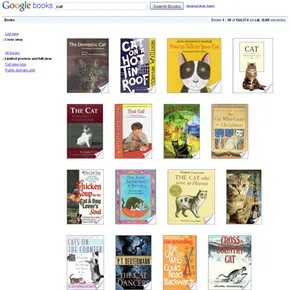
For the average user, the impact was immediate. Search results began to show snippets from books. A paragraph here. A page there. It felt like magic. You could find a specific quote from a novel published in 1892. You could verify a historical fact in a scientific journal from 1950. The barrier to entry for deep research collapsed. But behind the scenes, the legal battles raged. The tension between open access and intellectual property rights remained unresolved.
The
Scanning millions of books is not just a logistical headache. It’s a technical minefield. Traditional scanners rely on glass plates to flatten pages, ensuring OCR software can read text without distortion. But flattening a book risks damaging its spine and pages. Google wanted to solve both problems.
They patented a new method. Workers place the book on an open scanner. No glass. No pressure. The software accounts for the natural curve of the page. Characters remain legible even on warped edges. The system processes roughly 1,000 pages an hour. It’s fast. It’s gentle. And it was the foundation for a legal firestorm.
The Scope of the Archive
Google didn’t start this alone. They secured agreements with major institutions. The New York Public Library. Harvard. Michigan. Stanford. These libraries allowed Google to scan their collections. The result? Around 12 million books digitized early on.
This scale changed everything. Access became democratized. A student in Florida can now browse a Native American collection located on the other side of the country. Travelers who can’t afford a trip to France can read ancient texts from their living rooms. Visually impaired users can view enlarged displays, use Braille output, or listen via text-to-speech. The promise was clear. Knowledge, unlocked.
Public Domain vs. Copyrighted Works
Initially, Google Books focused only on public domain works. In the US, books enter this zone 70 years after the author’s death. No copyright. Free for all. These made up about 20% of all books.
But Google scanned more. They digitized copyrighted texts too. They didn’t show the whole book online. Instead, they limited snippets to about 20% of the content. Google claimed this was fair use. A necessary evil for indexing.
Authors and publishers disagreed. The Authors Guild and the Association of American Publishers filed a class-action lawsuit. The controversy went global.
Google Books Controversy and Proposed Settlements
The core issue is power. Rights holders want control over distribution. They want a cut of the profits. Google wants control over the information itself. More control means Google Books could become the world’s largest library. And its biggest bookstore.
The First Settlement: $125 Million and a Registry
The initial settlement with the Authors Guild and AAP was stark. Google paid $125 million. They also agreed to changes in database usage.
Key among these was the Book Rights Registry. Authors and publishers could settle copyright claims here. Rights holders could opt out. Refuse to let Google display their work. But there was a catch. If you were an international author who didn’t understand the registry’s mechanisms, you might miss the deadline. Your work would be included automatically.
The settlement also granted Google an exclusive license to scan and post pages of orphan works. These are copyrighted books where the owner cannot be found. Google could sell digital downloads. Set its own prices. Using the registry as a guide.
Critics called it unfair. They argued that Google’s copyright infringement led to a lawsuit that granted the infringer more power. The US Department of Justice intervened. They urged a fairer version.
The Revised Settlement: Orphan Works and Competition
The revised settlement changed the landscape. Google Books agreed to remove books published outside the US, UK, Canada, and Australia. This limited the scope significantly.
A new trustee was created to manage royalties from orphan texts. Instead of enriching Google, the revenue goes to copyright holders if they are found. If not, it funds literacy charities.
The exclusive license for orphan works was also addressed. Theoretically, this opens the door for competitors. Google Books wouldn’t have a monopoly on these elusive titles.
Why All the Controversy over Google Books?
It’s not just about money. It’s about who controls memory. Who decides what is preserved? And who profits from it? The technology worked. The access expanded. But the legal framework struggled to keep up. The debate continues. The books are there. The questions remain.
The legal battles surrounding Google Books copyright settlement are far from a simple matter of fair use. They expose a much messier reality about how we access information in the digital age. One question remains unresolved by any courtroom decision: what authority does a U.S. judge have to bind millions of rights holders who never agreed to the terms? For many critics, the infringement claims are just the tip of the iceberg.
Privacy and Data Harvesting
Privacy advocates are far more disturbed by the mechanics of the service than the legalities. Google’s privacy policy might look standard on paper, but the technical capability exists to track user behavior with invasive precision. We’re talking about logging exactly which pages you read, down to the specific timestamp.
Why does this matter? Because Google is a for-profit entity. It makes financial sense to monetize this behavioral data. When the platform displays snippets from public domain or copyrighted texts, it also serves targeted advertisements related to the subject matter. This is a proven revenue stream. If a tech giant can exploit granular reading data for ad sales, the potential for more intrusive commercial exploitation is real.
The Monopoly Question
The economic stakes are equally high. Authors and publishers sued because they saw their work being scanned and used to generate profit for a company that didn’t create the content. They argued this was large-scale infringement. But the fear runs deeper than immediate profits. If Google can scan snippets today, what stops it from displaying full texts tomorrow? Or worse, what prevents it from censoring passages or removing entire works at will?
The proposed settlement allowed authors to opt out of the Book Rights Registry, but this creates a risk of self-censorship. Rights holders might pull their work simply to avoid conflict, leading to gaps in the historical record.
The risk isn’t just legal. It’s structural. If Google controls the primary index of human knowledge, it controls access to it.
There is also the specter of monopoly. If Google Books becomes the default hub for global literature, it could charge prohibitive fees for access. A growing dependence on its authority could create an “information gap.” Users might assume that if a fact isn’t on Google Books, it doesn’t exist. This centralization of knowledge concentrates power in the hands of a single corporation.
What Comes Next?
Google continues to scan books at a relentless pace. Competitors, privacy groups, and federal authorities are watching closely. The outcome will define whether this tool democratizes knowledge or consolidates it as a utility for paywalls.
- Will it expand understanding? If access is open, it could help scientists solve global problems faster.
- Will it stifle progress? If the database becomes too large or restricted, it may hinder the very researchers it aims to help.
- Will it protect privacy? Or will it sell user habits to the highest bidder?
The path forward is unclear. The scale of the project is too massive for easy predictions. But the fight is already global. A French judge recently ruled against Google, forcing the removal of copyrighted French materials and imposing damages. This signals that the U.S. legal landscape is not the only battlefield.
Despite the complex jargon and legal maneuvering, the core issue is simple: who owns the future of reading? You might be witnessing the creation of the most powerful knowledge network in history. Or you might be watching the birth of a digital feudalism. The answer isn’t in the fine print. It’s in the code, the contracts, and the choices Google makes next.
The Aftermath of the Google Books Settlement
The dust hasn’t fully settled on the massive legal battles surrounding digitizing the world’s literature. While the initial $125 million settlement aimed to resolve class-action lawsuits, the real story is in the friction points that remain. We are looking at a landscape where Google Books settlement updates continue to reshape how authors, publishers, and libraries interact with digital archives.
France didn’t just watch from the sidelines. A Paris court recently shut down the Google Books project locally, citing violations of copyright and moral rights. This wasn’t a minor bump. It highlighted a stark divergence between US and European legal philosophies on what constitutes fair use versus outright infringement. For users outside the US, access to certain scanned texts is now strictly gated, proving that the “global library” dream has hard borders.
Why Authors and Libraries Are Still Worried
The core anxiety isn’t just about money. It’s about control. Critics like Pamela Samuelson and Brewster Kahle argued that the original deal gave Google too much leverage. The revised settlement attempts to address this by creating a “Rights Registry.” This body would manage opt-out requests and distribute royalties.
But does it work?
Many librarians remain skeptical. The concern is that the registry could become a monopoly of information rights, effectively allowing one corporation to dictate who gets paid and how books are accessed. Barbara Fister of Library Journal pointed out that the settlement leaves many questions unanswered, particularly regarding the pricing models for accessing full texts of copyrighted books.
“The deal doesn’t fix the fundamental imbalance of power between tech giants and creators.”
This power dynamic is why the Electronic Frontier Foundation pushed for escrow arrangements for the scans. Their logic was simple: if Google goes under or changes its mind, the public domain should not suffer. The scans need to be preserved independently of Google’s business interests.
How the Technology Actually Works
Behind the legal jargon is a staggering engineering feat. Google’s scanning machines, now patented, can process books at a rate of 1,000 pages per minute. They use overhead cameras to capture high-resolution images, which are then run through OCR (Optical Character Recognition) software.
This isn’t just about archiving. The real value is in the data. By scanning millions of books, Google built the largest textual dataset in history. This fuels their search algorithms, making their results more accurate. It’s a symbiotic relationship: the books improve the search engine, and the search engine drives traffic to the books.
However, this creates a privacy paradox. As Clint Boulton noted for Eweek, Google had to bow to pressure from the FTC to create specific privacy policies for Google Books. Users searching for specific passages or authors now have clearer protections against tracking, but the underlying infrastructure remains a black box.
What This Means for You
For the everyday user, the impact is subtle but significant. You can still search for snippets of books. You can still find out if a book exists and who wrote it. But accessing the full content of a copyrighted book often requires payment or institutional access.
The Google Books settlement aims to streamline this process, but the reality is fragmented.
– In the US: You rely on the Rights Registry for permissions.
– In Europe: You rely on national copyright laws, which are often stricter.
– In the Public Domain: You can read the full text for free, no strings attached.
The “dead souls” of literature—the books out of print and forgotten—are now alive again in digital form. But they are not free. They are assets. And who controls those assets determines who profits from them.
As we move forward, the key question isn’t whether Google will scan more books. They will. The question is whether the current framework ensures that authors are compensated fairly and that readers have equitable access. The French court’s intervention suggests the answer is still up for debate.