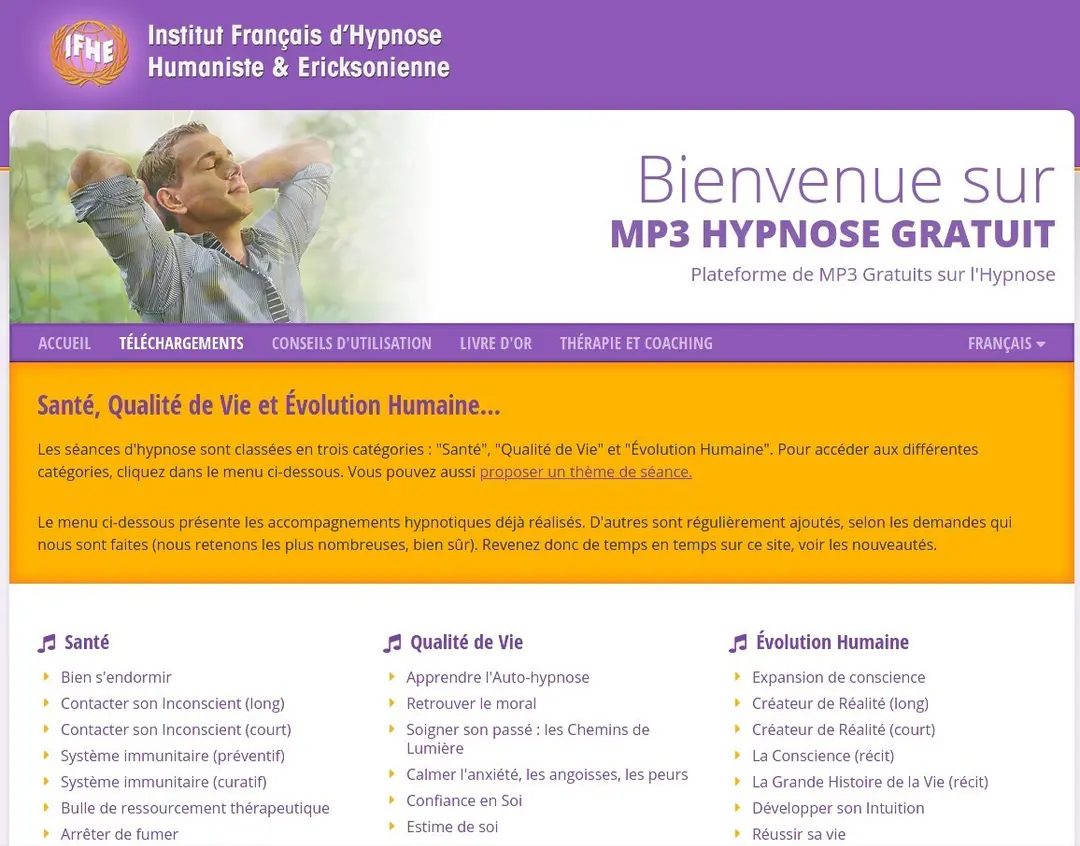
Most wellness tools want your email address. Some want a credit card. MP3 Hypnose Gratuit wants nothing. It is a free online platform and Android app that gives you access to professional-grade hypnosis and relaxation audio in standard MP3 files. No subscriptions. No intrusive ads. No account creation. You just pick a topic, hit play, or download the file, and go about your day.
What does MP3 Hypnose Gratuit actually offer?
The library covers the usual suspects for stress relief and sleep improvement. You will find tracks for sleep, general relaxation, building confidence, managing emotions, and motivation. Each file includes a detailed description before you commit to listening. You can see the duration, the specific approach used, and whether the voice is male or female. Some tracks include background music or natural sounds; others are just voice.
This level of detail matters. If you hate background music, you can skip those files without wasting ten minutes. If you prefer a female voice, you can filter for that. The site is designed for one-off use or long-term routine building. Whether you need a quick meditation break or a nightly sleep ritual, the content is there.
How to download hypnosis MP3s on Android or desktop
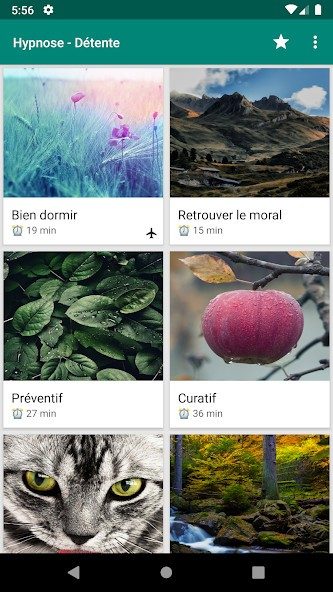
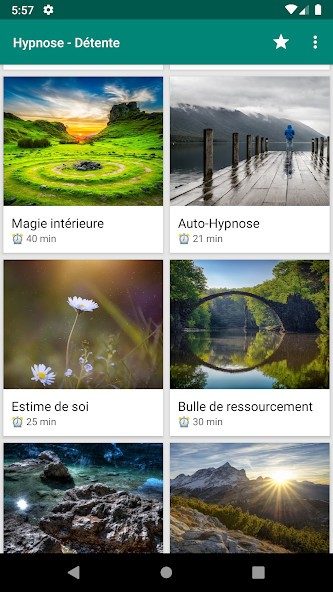
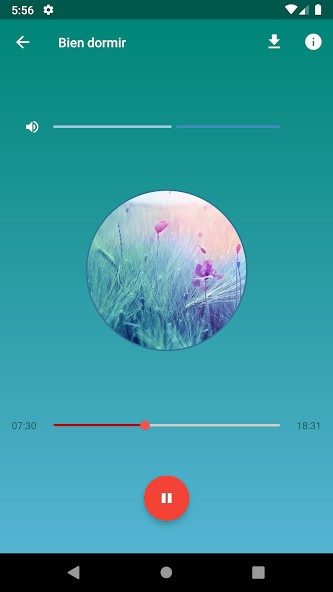
The technical barrier is low. On Android, you use the app. It has a clean interface that lets you browse the audio library and stream or download files instantly. On desktop, you just use a browser. No software installation is required. No email address is needed.
Once you download a file, it is a standard MP3. That is the key advantage. MP3 is a universal format. It works on Windows, MacOS, Linux, iOS, and Android. You can transfer these files to any media player, car stereo, or smart speaker. Even if you do not have a native app on your iPhone, you can still listen. Just transfer the file to the Music app or any compatible player.
The MP3 format guarantees compatibility across almost all operating systems, letting you listen in the car, via headphones, or on a smartphone without technical friction.
Why the online-first approach matters for tech users
The service runs in the browser. This eliminates the need for manual updates. When new content drops, you refresh the page. That is it. There is no “check for updates” dialog. No version compatibility issues. The platform handles the backend so you do not have to manage technical maintenance.
This setup appeals to users who value convenience. You can listen offline after a single download, which is useful for flights or commutes. But you also get instant access to new sessions without waiting for an app store update. The trade-off? You are dependent on the website or app availability for new content. But for the core function: relaxing, sleeping, or focusing, the friction is minimal.
Will you build a daily habit? That depends on whether the content resonates with you. The tool is there. The barrier to entry is zero.

How to use MP3 Hypnose Gratuit without hitting paywalls
Most free or freemium audio apps feel like a trap. Listen for ten minutes, then hit a paywall. Watch an ad, then ask for your email again. MP3 Hypnose Gratuit skips all that. You get unlimited access to the entire catalog. No time limits. No data collection. No ads.
That simplicity matters. If you are new to hypnosis, you can just start. No signup hurdles. No financial barriers. If you are an experienced user, you can use it for regular sessions or advanced practice. The interface lets you pick the voice, the sound environment, and the specific goal. Stress management? Sleep improvement? Creativity stimulation? You choose.
The economic model is transparent because it does not rely on user data or advertising revenue.
This privacy angle is a huge deal. If you hate apps that track your listening habits to sell to advertisers, this is a relief. The pedagogical aspect is also strong. Each track comes with indications that explain how hypnosis works and why it helps with relaxation or sleep. You are not just listening to a file; you are learning the mechanism behind it.
Why there is no premium version or student license
Here is the thing: there is only one version. It is free. It is complete.
In a market flooded with commercial solutions that chop features into tiers, that is rare. There is no “premium” unlock. There is no student discount to hunt for. You get the full tool.
The community aspect keeps it fresh. Users share experiences and suggest new themes. This feedback loop helps refine the catalog. The editorial team listens. They update content based on what people actually need. It feels less like a static app and more like a living resource.
How updates work without manual downloads
You do not have to download a new version to get the latest tracks. The platform uses silent, continuous updates. New files appear online automatically. Sound quality improvements land directly in the stream.
If you want the absolute latest optimizations, just refresh the interface. Using the Android version? Reinstall it from the store if the interface feels stale. That forces the update.
Older versions? Sometimes users want them for compatibility or personal preference. You cannot always access them directly, but the team often sends specific content upon request. It is not a rigid system. They are responsive.
Do you need technical skills or certification?
No. Not even a little.
You do not need a degree in psychology or IT skills to use this. The basics of hypnosis are explained in the file descriptions. Links to educational resources are available if you want to dive deeper into theory, meditation, or self-hypnosis.
Some practitioners might run workshops or advanced courses, but that is not required. The core purpose is self-assistance. You have ready-to-use sessions. Access them anytime. The tool evolves based on community feedback, keeping it practical and relevant.
Privacy is built into the architecture. The service is designed to protect personal data. It is open, but professional. The goal is simple: provide concrete, accessible help for daily well-being. Whether you are trying to sleep better or just unwind, the path is clear. No friction. Just audio.

How to run MP3 Hypnose Gratuit on your existing hardware
You don’t need a dedicated wellness device, a new tablet, or a fancy headset to make this work. The service pushes everything through standard MP3 files. This simple choice means your current setup is likely good enough. If you have an Android phone, an old Windows laptop, or even a standalone MP3 player that reads USB drives, you can play the sessions.
The platform works in two ways. You can stream directly through a modern web browser, which requires a stable internet connection. Or, you can download the files. This is where it gets useful for commuters or people with spotty Wi-Fi. Once a track is saved to your device, the internet is no longer part of the equation. You can listen offline.
“Lecture hors ligne possible après sauvegarde”
That’s the key phrase for anyone who wants to practice hypnose during a flight or a subway ride. You just need a device that can read MP3 files. Windows, macOS, Linux, iOS, and Android all handle this natively. No specific drivers or proprietary software are required.
Does the app require an account or subscription?
No. And that’s not a trick to get you to sign up later. The service is free, ad-free, and requires no registration. You can stream or download the tracks without creating a profile. This keeps the friction low. You land on the site, pick a session, and listen.
The data privacy angle is straightforward: since there is no account, the platform isn’t building a detailed profile of your listening habits. It’s a library you access, not a service that tracks you.
Why the file sizes vary so much
The technical specs list file sizes as “variable.” That’s because each session has a different duration and audio bitrate. A short relaxation track might be just a few megabytes. A longer, deeper hypnosis induction could be several dozen megabytes.
This matters if you are downloading on a phone with limited storage. Check the size before you hit download. If you are streaming, your bandwidth determines how smoothly it plays. A high-quality MP3 needs a decent connection; a lower bitrate file will buffer faster on a slower network.
What you actually need to get started
- For web streaming: A modern browser on any computer or mobile device. Internet connection required.
- For offline listening: An Android phone (via the official app) or any device with a file manager. Download the MP3s first.
- For audio quality: Decent headphones or earbuds are recommended. The service is MP3, so it’s not lossless audio, but good speakers will help you hear the subtle instructions clearly.
No installation is needed for the web version. The Android app is available through the official store. Updates and new tracks are handled on the server side. You don’t need to manually update anything. Just open the browser or the app, and the library is current.
The whole system is designed to stay out of your way. You focus on the session, not on the tech stack.
Running Windows 10 without a TPM 2.0 chip
Yes, you can run Windows 10 on a machine that lacks a TPM 2.0 chip. The operating system does not check for this hardware on standard desktops or laptops during a fresh install. It only becomes a hard requirement when you attempt to upgrade to Windows 11. If you’re staying on Windows 10, your PC will boot, update, and function normally without the secure enclave.
This distinction matters because many older business workstations and consumer devices from the 2010s era never included TPM 2.0. Microsoft’s decision to mandate it for the next version forces users to either buy new hardware, stick with Windows 10 until support ends, or look for third-party alternatives. But if your goal is simply to keep using your current setup, the absence of that chip is not a blocker.
Why TPM 2.0 matters for security
TPM, or Trusted Platform Module, is a dedicated chip that stores cryptographic keys. Think of it as a vault on your motherboard that handles sensitive data like encryption keys for BitLocker or Windows Hello. Without it, your PC relies on software-based key storage, which is generally considered less secure because it can be targeted by malware running in the same operating system.
For most users, this doesn’t change day-to-day usage. You won’t notice a difference in speed or battery life. But if you enable full-disk encryption, the TPM provides hardware-backed protection that is harder for attackers to compromise. That’s why Microsoft pushes it: it’s a baseline for modern security expectations, not just a feature toggle.
Can you add TPM 2.0 to an older PC?
In some cases, yes. Certain Intel and AMD CPUs from 2013 onward include a firmware TPM, often called fTPM. If your processor supports it, you might be able to enable the feature in your BIOS settings. Look for options labeled “Intel Platform Trust Technology” or “AMD PSP” (Platform Secure Processor). Enabling this turns on a virtual TPM 2.0 without needing a new physical chip.
However, not all motherboards expose this setting, and some OEMs disable it entirely. If you can’t find the option, you’re likely out of luck unless you replace the motherboard. A discrete TPM 2.0 module can be added to systems with a TPM header, but this is rare in consumer PCs and mostly seen in enterprise environments.
What happens when Windows 10 support ends
This is the real deadline. Microsoft has committed to supporting Windows 10 until October 14, 2025. After that date, no more security updates, patches, or bug fixes will be released. Running an unsupported OS on a connected device is risky. You’ll be exposed to new vulnerabilities with no official fixes.
If your PC lacks TPM 2.0 and you can’t enable fTPM, you have a few paths:
- Buy a new device that meets Windows 11 requirements.
- Stick with Windows 10 and accept the security risk post-2025.
- Use a Linux distribution if you don’t need Windows-specific software.
- Look into third-party Windows 11 bypass tools, though these are unofficial and may break with updates.
The bypass methods