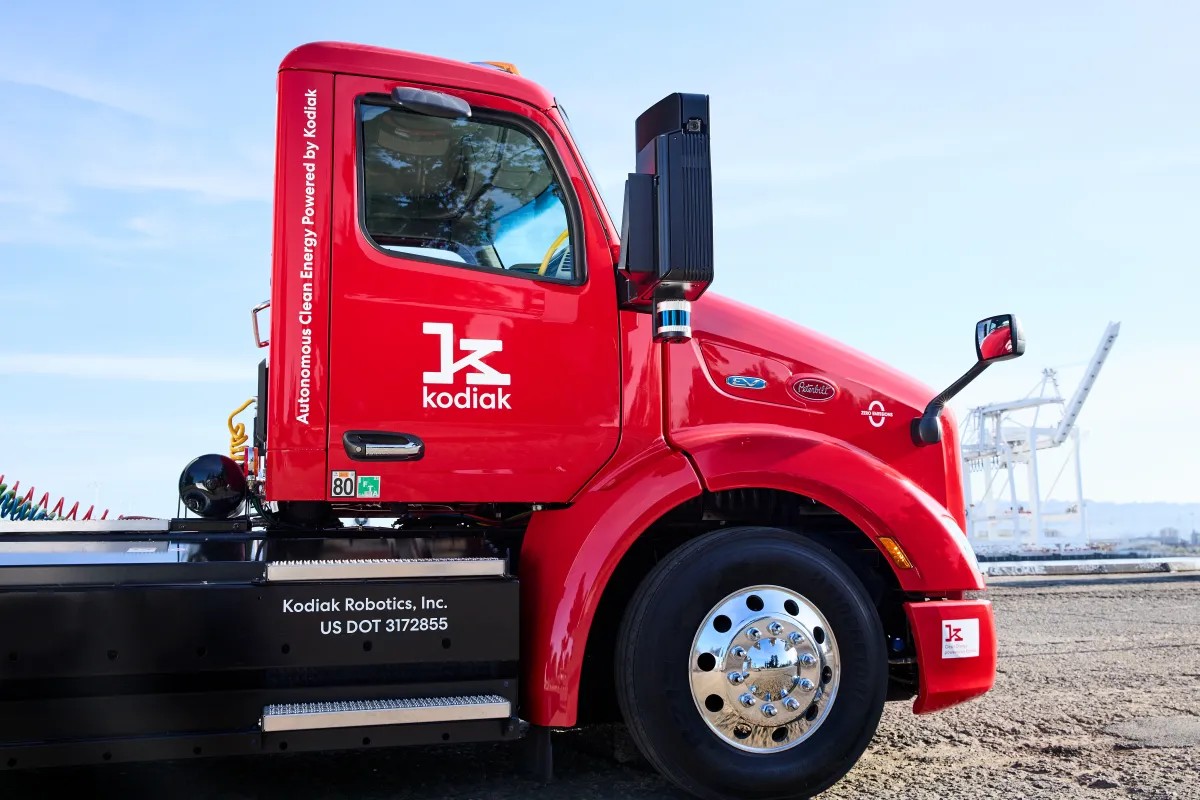
Kodiak AI, the self-driving truck startup, saw its shares crash 37% in after-hours trading on Thursday following the announcement of a $100 million fundraising round. The steep drop was triggered not by a lack of investor interest, but by the terms of the deal: the company sold shares at a significant discount to their current market price, signaling that while capital is available, investors are hesitant to pay premium rates for the stock.
The Cost of Capital: Why the Discount Matters
According to a filing with the Securities and Exchange Commission (SEC), Kodiak sold shares at $6.50 each, a substantial undercut compared to its closing price of $9.10 the previous day. The financing package also included warrants, granting investors the right to purchase additional shares later at prices as low as $6.
The funding was secured from existing backer Ares Management and several unnamed institutional investors. This dynamic highlights a common tension in the growth-stage tech sector: companies need cash to survive and scale, but issuing shares below market value dilutes existing shareholders and can erode confidence in the company’s near-term valuation.
“The raise — while sizable — does little to change that math in the near term,” noting that the company is burning cash rapidly.
High Burn Rate vs. Modest Revenue
The investor skepticism is rooted in Kodiak’s financials. The company is in the expensive phase of scaling its autonomous trucking operations, which span both off-road industrial sites and public highways.
- Revenue Growth: First-quarter revenue rose to $1.8 million, up from $1.4 million in the same period last year.
- Operational Losses: The loss from operations nearly doubled to $37.8 million, compared to $18.9 million a year prior.
While revenue is ticking upward, the widening operational losses underscore the heavy capital expenditure required to build and maintain autonomous fleets. The $100 million injection provides runway, but it does not immediately solve the path to profitability.
Strategic Shifts and New Partnerships
Despite the stock volatility, Kodiak is advancing its commercial strategy with several key partnerships announced or highlighted alongside the fundraise:
- Roehl Transport: A new contract will see Kodiak-equipped trucks autonomously haul freight between Dallas and Houston on four round trips per week. While the trucks operate autonomously for the entire journey, a human safety driver remains behind the wheel as a precaution.
- West Fraser Timber Co.: A pilot program is underway in Alberta, Canada, testing autonomous trucks for log-hauling operations.
- General Dynamics Land Systems: A collaboration to develop autonomous ground vehicles for defense applications.
Currently, Kodiak owns the trucks, provides the safety drivers, and carries the freight for clients including Roehl, Werner, J.B. Hunt, Bridgestone, Martin Brower, and C.R. England. However, CEO Don Burnette outlined a shift in business model for the future.
The Road to Driverless Operations
Kodiak aims to transition from owning assets to providing a “driver-as-a-service” model. In this future state, customers will own and operate the trucks, while Kodiak supplies the autonomous technology. This mirrors the company’s existing off-highway deployment with customer Atlas in the Permian Basin, Texas.
Burnette stated that the company plans to remove safety drivers by the end of 2026, but emphasized that full driverless operations on public highways will only begin after rigorous validation is complete.
- Autonomy Readiness Measure: Kodiak introduced a zero-to-100 scoring system to track internal safety validation. As of April, the company scored 86%.
- Timeline: Driverless launches on public highways are targeted for later this year, contingent on finishing the remaining validation work.
Context: From SPAC to Scrutiny
Kodiak, formerly known as Kodiak Robotics, went public in September via a merger with special-purpose acquisition company (SPAC) Ares Acquisition Corporation II. At that time, the startup was valued at approximately $2.5 billion, raising $275 million in financing.
The initial raise included $145 million in Private Investment in Public Equity (PIPE) and roughly $62.9 million from Ares’ trust cash. However, the trust fund had shrunk from its initial $562 million due to standard SPAC redemptions, where investors withdraw funds before the merger closes. The current discounted raise reflects the market’s reassessment of Kodiak’s value post-SPAC, balancing its technological progress against the harsh realities of cash burn and valuation compression.
Conclusion
Kodiak AI’s recent fundraise illustrates the challenging environment for autonomous vehicle startups: securing capital is possible, but often at the cost of short-term stock performance. While the company demonstrates operational momentum through new contracts and a clear roadmap to driverless service, the market remains cautious about its path to profitability and the dilution effects of discounted equity offerings.