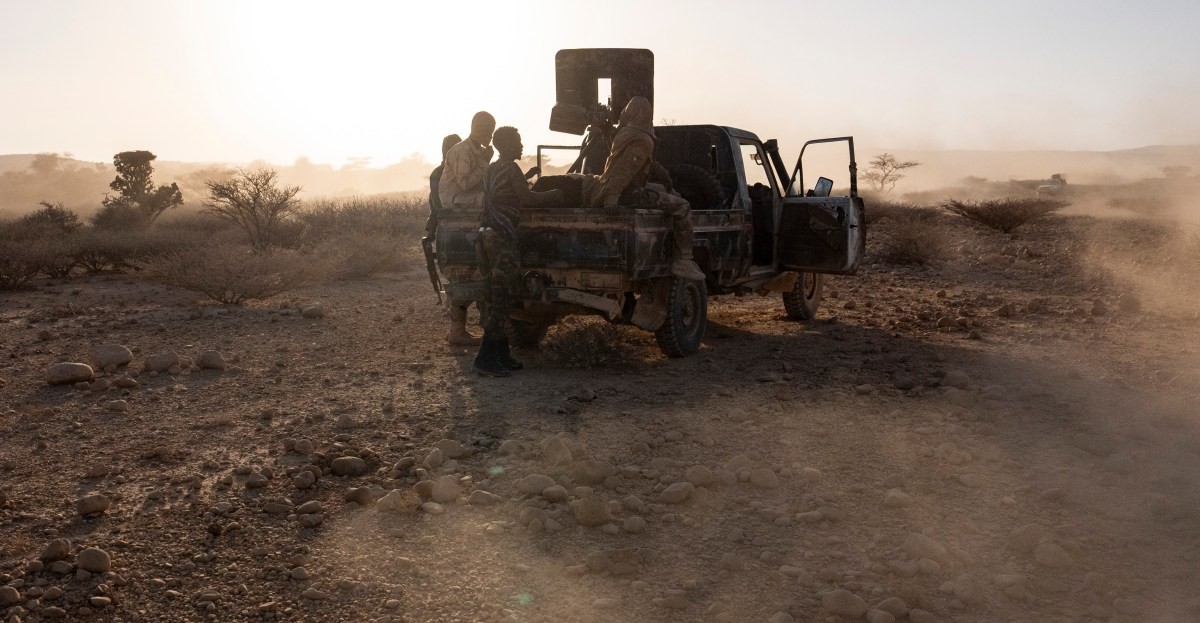
The most extensive military campaign under President Donald Trump’s second term is not focused on high-profile conflicts like Iran or Venezuela—it’s happening in Somalia. Since returning to office, the administration has dramatically increased airstrikes in the country at a rate exceeding previous administrations, yet rarely mentions the operation publicly.
This surge in strikes is driven by expanded presidential authorities and growing concern over ISIS’s Somali affiliate. Loosened rules on targeting have given military commanders wider latitude to strike suspected militants. The campaign operates with minimal public oversight, raising questions about its long-term impact. While airstrikes may eliminate militant leaders, experts question whether airpower alone can stabilize Somalia or address the underlying governance failures that fuel extremism.
The administration’s silence on this operation is notable. President Trump posted a Fox News article about a US strike targeting ISIS leaders in Somalia on February 3, alongside a derogatory remark about Congresswoman Ilhan Omar, a refugee from the country. While such inflammatory comments are common, the mention of the strikes stood out as unusual.
This post, along with a similar one the day before, was the first time in a year that the president’s account had referenced his military campaign in Somalia, despite bombing the country more than any other during that period. Trump has quietly overseen a massive escalation of airstrikes in Somalia with little public explanation, exceeding levels seen under previous administrations.
A Dramatic Increase in Operations
Data compiled by New America reveals the scale of the escalation. In 2025, the US carried out 125 airstrikes and one ground raid in Somalia, compared to 51 operations during Joe Biden’s entire presidency. Already in 2026, the US has conducted 28 operations, surpassing any full year under a non-Trump president. Casualty estimates range from 172 to 359 deaths during Trump’s second term, though US Africa Command (AFRICOM) stopped reporting these figures in April, suggesting the actual toll is likely higher.
For comparison, the US conducted just 34 strikes against alleged drug trafficking boats in the Caribbean and Eastern Pacific during the same period. Furthermore, the US carried out more strikes in Somalia last year than it did in Pakistan at the height of the Obama administration’s drone war, a period marked by major controversy and national debate.
Why Somalia?
Several factors appear to be driving this escalation. First, there’s a genuine concern about Somalia’s role in the resurgence of global jihadist terrorism. Second, relaxed rules on civilian casualties allow for more aggressive targeting. Third, the post-9/11 war machine operates with increasing autonomy, reducing the need for presidential intervention.
Somalia has been in civil conflict since the early 1990s, and the US has been involved for almost as long. The deaths of 18 US Marines in Mogadishu in 1993 remain a stark reminder of the risks. After 9/11, the US began targeting militants, including al-Shabab, which once controlled large swathes of Somali territory.
Today, the focus is shifting towards ISIS’s Somali affiliate, which experts believe plays a key role in facilitating global attacks. Lt. Gen. John Brennan of AFRICOM claims the stepped-up campaign disrupts plots against the US and Europe. Some experts dispute whether the affiliate leader is a global caliph, but agree that the group is a significant threat, handling fundraising, financing, and recruitment.
The Shift in Targeting Rules
The expansion of strikes coincides with relaxed targeting standards under Trump. In 2017, the administration reduced oversight, giving AFRICOM greater latitude to strike targets. This trend continued upon Trump’s return to office, likely contributing to the surge in operations.
Former National Security Council Director for Counterterrorism, Sebastian Gorka, claimed that Trump personally approved an early strike against an ISIS operative in Somalia, highlighting the president’s involvement at times. The relaxed standards mean such personal approval is no longer necessary, allowing strikes to proceed more autonomously.
A War on Autopilot
The US may be prioritizing Somalia due to convenience and institutional momentum. After withdrawing troops from other counterterrorism hubs, Somalia offers a stable environment with existing cooperation with local forces. The operation appears to be running “on autopilot,” with the bureaucracy supporting continued strikes rather than seeking alternative approaches.
The Department of Defense spokesperson, speaking anonymously, stated that the strategy relies on “trusted partnerships” and empowers commanders to protect US interests. However, Trump rarely discusses this operation publicly, even as his administration escalates military action in the country.
Ultimately, the US is conducting an extensive air war in Somalia with minimal scrutiny. The reasons for this escalation remain unclear, but the consequences are significant. The long-term impact of these strikes on Somalia’s stability and the broader fight against terrorism remains to be seen.