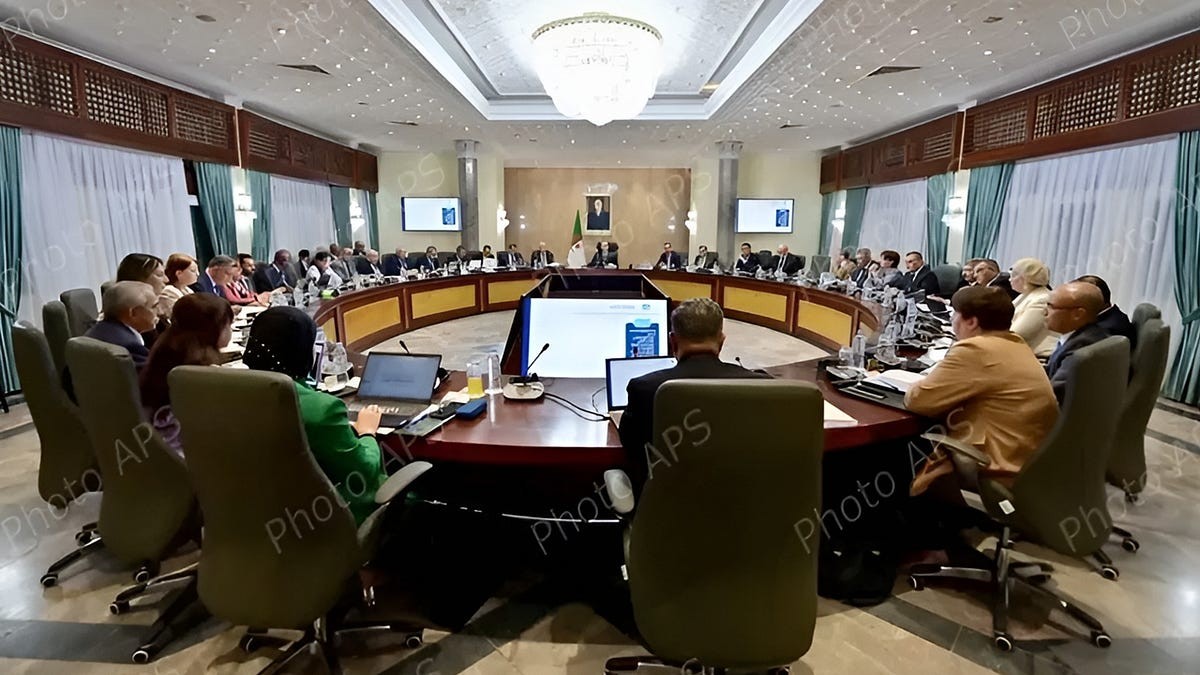
It wasn’t a planning meeting.
Prime Minister Sifi Ghrieb sat down on 25 May, 2026 to cut through the noise. The government reviewed the status of the National Artificial Intelligence Strategy, which sounds grand on paper but gets tricky in the code, and gave the green light for the Dzair portal to go live.
This isn’t theory. It’s deployment.
The Six Pillars in Motion
Algeria built its AI strategy around six legs. Research, skills, infrastructure, specific sector apps, investment, data governance. They are currently executing across all of them.
A six-pillar strategy only works if you actually walk on them.
The country has a strong hand to play here. The education system pushes computer science hard, producing 74 master’s programs in AI across 52 universities. It’s a domestic talent pool that’s finally reaching a size worth talking about.
52 Services. One Login.
Then there’s Dzair.
After months of testing, the portal cleared the security gauntlet. The Information Systems Security Agency (ASS) checked it under the watch of the Ministry of National Defense, and it passed. Between March and April, over 1,700 citizens used the pilot version. No trips to government offices. Just a phone or a laptop.
Now it’s ready.
Fifty-two services go online immediately. Civil registry, justice, health, land titles, social solidarity. The platform consolidates what used to be fragmented islands of bureaucracy into a single entry point. You get a digital ID, backed by the Ministry of the Interior. You get an e-wallet to hold the documents you download. It feels less like a website and more like an identity.
Meriem Benmouloud and her High Commission for Digitalisation built this under the 2025–30 Digital Transformation Strategy, and for the first time in a while, it actually works.
The Talent Paradox
Here’s the rub though.
Algeria punches above its weight in science. More than 57,00 students study CS. Local researchers sit in the global top 2%. The nation ranks in Africa’s top five for scientific publications.
So why isn’t everyone talking about it more?
Because talent needs hardware. The AI strategy faces gaps in compute power. Data readiness is lagging. Investment isn’t there yet. The 2019 origins of this strategy evolved through a major revision in 2022 into what we see today, advised by a dedicated AI Council. The test now isn’t who is smart, it is whether they can turn that brainpower into infrastructure.
If the servers don’t scale, the masters degrees are just certificates. If the data stays locked, the apps stay empty.
They have launched the portal. They have outlined the pillars.
The real question isn’t if Algeria can write code.
It is whether they can build the pipes to carry it.