You’re probably reading this right now on a web-connected device. If so, you may be using Network Address Translation (NAT). It happens in the background. You may not even know it exists.
The internet is huge. Currently, the estimated number of active users is over 5.35 billion. That’s a lot of people. It has a lot of devices. This increase is directly related to how important NAT is to you. This is more than just a technical footnote. This is the mechanism that keeps the web running for billions of users.
IP address exhaustion crisis
Every computer that communicates with another computer on the Internet requires a identity. This is the IP address. Abbreviation for Internet Protocol. Think of it as a numeric street address. This tells the web exactly where to send the data.
When IP was first designed, engineers thought there was plenty of room. They counted 4,294,967,296 unique addresses. It is $2^{32}$. Sounds infinite.
This is not enough.
Your actual public address range is smaller. The figure is 3.2–3.3 billion. Why? This is because the addresses are divided into categories. Some are reserved for multicast. The others are left for testing. The explosive growth of the home web and business infrastructure has consumed the supply. Individual public IDs have run out.
The obvious solution is to reformat the address. This is IPv6. More addresses are allowed. However, implementation has been slow. It requires changes to the entire global infrastructure. This will take years.
How does NAT solve this shortage?
This is where NAT comes into play. In particular, RFC 1631 defines this approach.
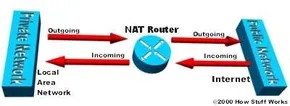
One device (usually a router) acts as a agent. It sits between the public Internet and a private local area web. Your router has a public IP. Laptops, mobile phones and smart TVs are not. They use private IP addresses. The router converts between the two.
Only one unique IP address can represent an entire group of computers. This solves the lack of a public IP address. But that’s only half the story.
Office receptionist analogy
Cisco invented this concept. The easiest way to understand how NAT works is by analogy.
Imagine a large office building. You are an internal employee. You have instructions for the receptionist. Do not transfer calls to me unless I agree.
Next, call your potential client. Leave a message. Tell the receptionist, “I’m expecting a call from this person.” You give her the exact information.
The customer calls the building’s main number. It was the only number he knew. She asks for you. The receptionist checks the lookup table. This table matches your name to the your extension. She remembers that you requested this call. He guides client.
Without this search table and this permission, client will be blocked or lost. NAT does exactly this for data packets.
The mechanism behind the translation
NAT acts as a gatekeeper. It sits between your internal web and the rest of the world. It can be a firewall, router, or computer configured to handle your traffic.
It manifests itself in many different ways. It works in different ways depending on your configuration and your security or simplicity needs. The basic functions remain unchanged. It maps internal private addresses with a single public ID. Controls data flow so that external webs do not need to know the internal layout of the local system.
This setting doesn’t just address conservation. It adds a layer of obscurity. External parties see your router’s IP address, not your personal device’s IP address. This is a security benefit. The primary driver is still the exhaustion of IPv4 addresses.
The technology has matured. It is standard on almost all consumer routers sold today. Once you understand this, you can see why you can connect five devices to a Wi-Fi web using just one public IP address. This is a smart solution to the problem we created by growing too fast.
Static NAT: One-to-one bridging
Static NAT is equivalent to a direct line. Mapping exactly one unregistered private IP address to one registered public IP address. No sharing. No confusion of ports. It’s just a direct tunnel between the outside world and a specific internal device.
Why is this important? Because in some cases you need a device that can be accessed via the Internet. A web server. A game server. A secure remote access point. Static NAT is a standard tool when hosting content that external clients need to find.
This works by creating a permanent entry in the NAT table. When an external packet arrives on a public IP, the router looks for the corresponding private IP and forwards the traffic. When the device responds, the opposite happens. The source IP is changed back before entering the circuit.
This is not dynamic. Mappings remain unchanged. There is no expiration date. It sits there and waits.
“Static NAT is especially useful when you want to access a device from outside the network.”
This permanence comes with a trade-off. A public IP is required for any internal server that requires inbound access. If you’re running three public-facing services, you’ll need three Static NAT entries and three public IPs. This can quickly exhaust the address pool.
Compare this to PAT (Port Address Translation), where dozens of internal devices share a public IP. PAT is efficient. Static NAT is transparent.
The key word here is transparency. External clients see internal devices as if they were directly on the Internet. Debugging doesn’t have the complexity of port mapping. There’s no “why can’t I connect?” Moments caused by port misconfiguration. IP is an identity. It’s not a lie.
This makes troubleshooting easier. If something goes wrong, you’ll know exactly which device is involved. No need to guess based on port number. I’m pinging a public IP and communicating with a private device.
However, this is not suitable for all situations. You don’t set up static NAT for your laptop. It’s not needed for email clients or normal browsing. Those don’t need inbound connections from the wild. Using Static NAT for general traffic is redundant and poses a security risk.
It’s for the servers. The ones that scream, “Find me.”
The configuration is simple but rigid. Define an internal local address (private IP). Specify your internal global address (public IP). You bind them. That’s it. Firewall rules will still be applied, but the conversion itself will not be visible to end users.
There’s a subtle security implication too. It does not hide the device, but isolates it. You can also restrict who can access that public IP. However, the translation mechanism itself doesn’t add a layer of obscurity. If you want to hide it, you can use PAT or a proxy. If accessibility is required, you can use Static NAT.
This is a special tool. Not your whole toolbox. However, if you want a direct line, this is the only way.
Static NAT is strict. This is a 1:1 lock. But the real world is messed up. Most networks do not have enough public IP addresses for all devices. That’s why we use Dynamic NAT. It is not fixed. It’s a revolving door.
Devices on the network start with a private, unregistered IP address. It wants to talk to the outside world. Routers do not assign permanent public addresses. Instead, it picks one of the registered IP addresses. Think of it like parking for a rental car. You drive a car (IP). You’re the one driving. Send it back. The next person enters the next vehicle.
This mapping only exists while the session is active. If the connection is lost, the public IP is returned to the pool. It’s free for everyone else. This will save your address. This works well. However, it is limited by the size of the pool. When it runs out, the next request will fail.
When one IP is not enough: Enter Overloading
What if I have 50 devices and only one public IP address? I can’t have 50 cars in my garage. This means breaking the rules of traditional networking. Start using the port.
This is overload.
Also called PAT (Port Address Translation). or single IP address NAT. or port level multiplexing NAT. Pick your poison. The concept is the same. Combine multiple private IP addresses into one public IP address. how? Use unique source ports for each connection.
The laptop greets the web server. Use port 49152. The desktop greets the same server. Use port 49153. The router remembers this. Mark each packet with an internal IP address and port. When the response is returned, the router looks at the port number. Know exactly which internal device your data belongs to.
Overloading is not the only solution. This is why most home and small business Internet connections work well.
Without port reuse, the Internet would have collapsed under the weight of private addressing years ago. Create virtual subnets by borrowing TCP/UDP header structures. This is very clever. it is necessary. It’s everywhere.
Why this matters to everyday users
You may not see this happening. Just turn on the computer. You are browsing the web. it works. However, if you’ve ever experienced a dropped connection because your router ran out of sessions, you’ve reached your NAT limit. Even worse is the limitation of available ports.
One IP address has 65,535 ports. For most, this is enough. But what about frequently used routers? Not so much. If you’re downloading large files, streaming 4K video, and using a home server at the same time, these ports can quickly deplete.
Dynamic NAT provides flexibility. Overloading increases scale. Together, they hide private network interference from the public Internet. What the outside world sees is IP. There are dozens of inner worlds within you.
trade-off? Complexity. Diagnostics get harder. If something goes wrong, you can’t just look at the public IP address. You need to follow the port mapping. This is the abstraction layer. Useful, but opaque.
It doesn’t matter if
Handle address conflicts for NAT Overlap
Most networks do not have this problem. They just grab a block of public IPs and that was it. However, if your internal network uses a range that “already exists” on the Internet (for example, you use 192.168.1.0/24 internally, but the range is assigned to another company elsewhere), a conflict arises. The router cannot send packets containing these source IPs out of the network. Upstream providers can drop them or misroute them.
Therefore, the router must intervene. It needs to maintain a lookup table. Every time a device on your network tries to communicate with the outside world, your router intercepts the packets. It swaps the “internal” private address with your unique registered public IP address. It’s simple enough. But wait. It’s not just outbound traffic.
If the “other” network (the one you accidentally shared the address space with) tries to contact you, your router has to do the reverse translation. Take the “external” registered address and map it back to your private network address. This two-way translation sets up a overlapping IP addresses NAT configuration.
There are two main ways to deal with this tricky situation. Static NAT works when the mapping is fixed. We tell the router, “If you see IP X on the outside, send it to IP Y on the inside.” It’s rigid. Predictable. However, it doesn’t scale. Managing static entries becomes a nightmare when you have a large number of conflicting ranges.
Another option is dynamic NAT, which is often used in conjunction with DNS. Here, the router dynamically assigns available public IP address from a pool. DNS resolves the confusion by ensuring that the translation logic works even if an internal host tries to access the external network with a “wrong” (but overlapping) name. It’s very messy. It’s complex. But if your network’s identity conflicts with someone else’s, it’s the only way to keep the connection active.
Stub domain description
Most internal networks are just LANs. This setting is called a stub domain. Use a private IP address. Traffic remains indoors. It rarely leaves the building.
But here’s the problem. Internal IP addresses may be registered. If it is not registered, you will face problems. You cannot communicate directly with the outside world. Requires NAT. Network Address Translation. This is a bridge. Without this, unregistered addresses are stuck.
“Computers with unregistered IP addresses must use NAT to communicate with the rest of the world.”
Now let’s talk mechanics. How exactly do you set this up? There are several ways to configure NAT. Let’s look at these options next.
Special thanks to Cisco for helping write this article.
Network Address Translation (NAT) is not a single configuration. This is a configuration strategy. You can adjust it to suit your infrastructure. In a standard configuration, the NAT router does the heavy lifting. Obtain an unregistered local IP address from your private network and replace it with a registered global address. This exchange occurs when an internal device tries to communicate with the outside world.
Consider your ISP quota. You will receive a set of unique registered IP addresses. These addresses are called “inside global” addresses. This is the public face of the network. In a private network, however, you use an unregistered private IP address. These split into two groups. The NAT router itself has a small set of “outside local” addresses reserved. In addition, there are also a large number of “internal local” addresses. These reside in the stub domain, which is the internal network where most of the work happens.
The router uses these outside local addresses to translate the unique “outside global” addresses of public devices. Most computers in a stub domain simply communicate with each other. Use these internal local addresses. They never need to go public. But what about some machines? They are very talkative. They communicate with external servers. These are assigned inside global addresses. They don’t require translation. They already have a public ticket to ride.
The Packet Journey in Standard NAT
When a computer with an internal local address connects to the Internet, it sends a packet to a NAT router. The router doesn’t just guess. Check the routing table. Does it have an entry for the destination? If so, the device translates the packet. It also creates a new entry in the address translation table. This table tracks of who is talking to whom. If the destination is not in the table, the packet is dropped. Period.
After translation, the router uses the inside global address to forward the packet. a computer on the public network responds. The source address for this response is an outside global address. The destination is an inside global address. The NAT router looks up the destination IP in its translation table. It finds the mapping. Converts an inside global address back to an internal local address. Then it sends the packet to the right computer. Simple.
NAT overload connections
NAT overload takes efficiency further. It uses multiplexing, a feature of the TCP/IP stack. This allows one computer to simultaneously maintain multiple simultaneous connections to remote servers. How? By using different TCP or UDP ports.
The IP packet header is a data container. It contains four important pieces of information:
- From address – the IP of the computer sending the data. Example: 201.3.83.132
- Source Port – The port number specified by the sender. Example: port 1080
- Destination address – the IP of the receiving computer. Example: 145.51.18.223
- Destination Port – Port number that the sender wants the receiver to open. Example: port 3021
The addresses identify the machines. The ports ensure the connection is unique. You can have multiple conversations with the same server if the ports are different. The combination of these four numbers defines a TCP/IP connection.
Port numbers are 16 bits long. In theory, this gives you 65,536 possible values. In reality, different manufacturers map ports differently. A typical system can expect about 4,000 free ports. This is sufficient for most users. But it also highlights the importance of dynamic allocation.
Dynamic Network Address Translation
Dynamic NAT works a little differently than a static setup. Here is the breakdown.
Internal networks (stub domains) use IP addresses that have not been assigned by IANA. These are not routable. They are not unique worldwide. The company set up a NAT-enabled router using unique IP addresses provided by IANA.
This process begins when a computer on a stub domain tries to connect to an external server, such as a website.
- The router receives the data packet.
- It saves the computer’s non-routable IP address in the translation table.
- Replace the sender’s non-routable IP with the first available unique IP address.
- The table maps private IP addresses to public IP addresses.
When the destination responds, the router checks the destination address. It looks up the translation table. It finds the matching private IP. Change the destination address back to the original non-routable address. It sends the packet to that specific computer.
If there is no match in the table, the packet is dropped. This process repeats as long as communication continues. This dynamic approach saves a public IP address. It doesn’t assign them permanently. It borrows them from the pool. When the session ends, the IP goes back into rotation.
How NAT overloads map connections
NAT overloading is more than just replacing one IP address with another. It maps individual connections so that one public IP can serve dozens of internal devices.
This is the process. Computers in a private network send packets to external servers. A NAT router intercepts it. Packages are not forwarded immediately. Instead, it logs the internal IP address and source port in the translation table. Then replace the source IP with its own public IP address. A new source port is also specified. This new port points to an entry in the translation table.
When the external server responds, the packet arrives at the router. Routers examine the destination port of incoming packets. Find the corresponding entries in the table. It swaps the public IP back to your internal private IP. Reset the port number to the number expected by the original computer. The package arrives at the right machine. This cycle repeats for each subsequent packet.
The router keeps the entry active. The timer is reset every time mapping is used. The timer expires if the connection goes silent. The entry disappears. Other devices can use this port.
Visualizing the Stub Domain Translation
Imagine a stub network with four computers all trying to connect to the Internet. They all share a public IP address of 215.37.32.203 on the NAT router.
Here’s how routers use ports to distinguishes them:
- Computer A (
192.168.32.10) connects to port 400. The router assigns it port 1 on the public IP address. - Computer B (
192.168.32.13) is connected to port 50. The router gives it port 2. - Computer C (
192.168.32.15) uses port 3750. The router maps it to port 3. - Computer D (
192.168.32.18) is connected to port 206. The router assigns port 4.
The external network sees all traffic from 215.37.32.203. They recognize ports 1, 2, 3 and 4. Private 192.168.x.x addresses are not seen. The router uses these port numbers to send responses back to the correct internal device.
You can exclude certain devices from this process. Configure the access list. Tell your router which IP addresses are exempt. These computers bypass NAT entirely. They keep their own address. All others are overloaded to one public IP address.
Hardware is important here. The number of simultaneous translations depends on the DRAM memory. Each entry requires about 160 bytes. A router with 4MB of DRAM can handle about 26,214 simultaneous connections. This is sufficient for most small and medium-sized offices.
Why do private IP ranges exist?
Not all IP addresses are the same. Some are public. Some are private. IANA reserved specific ranges for private use. These are defined in RFC 1918. These are called “unregistered” addresses.
Attempts to route traffic using these addresses on the public Internet will fail. Routers are programmed to drop packets with unregistered source addresses. A packet can be sent out of the network, but the first external router the packet reaches will be discarded. It will never return.
There are three standard ranges for private use.
- Class A :
10.0.0.0~10.255.255.255 - Class B :
172.16.0.0~172.31.255.255 - Class C :
192.168.0.0~192.168.255.255
You don’t have to pick one range and stick to it. You can also mix them. However, this is bad practice. A conflict arises. If one subnet uses 192.168.1.0 and another uses 192.168.2.0, combining them will cause confusion. Stick to one range per network design. Keep the routes clear.
Security Implications of NAT
NAT provides a layer of obscurity. External scanners can only see the router’s IP address. They don’t see the inner workings. They don’t know that there were four computers behind this address.
This is not a firewall. Content is not filtered. Packages are not checked for malware. It just translates addresses. However, the internal topology is hidden. That’s something.
With so many devices sharing a single IP address, it’s difficult to manage. Check the translation table for troubleshooting. You need to know which ports are assigned to which users. If your users are complaining about slow speeds, you can check if your translation entries are out of date or if the port is exhausted.
The security perimeter is the router. If the NAT device is compromised, the entire stub domain is compromised. All translations are displayed. All connections can be manipulated.
There is a trade-off. You can save on IP addresses. You get basic stealth. However, you lose detailed visibility into individual device traffic. The router becomes the single point of failure and the single point of observation.
What does this mean for you? Networks are hard to map from the outside, but harder to debug from the inside. You have to rely on the translation table. You have to trust the timer. You also have to hope that the DRAM doesn’t fill up before the connection ends.
Dynamic NAT does more than just shuffle IP addresses. It quietly builds a firewall between your internal network and the outside world. Or between the internal network and the Internet. The rules are simple. NAT only allows connections originating from the stub domain.
Basically, this means that computers on external networks cannot connect to your computer. Unless your computer initiated the contact. You can browse the Internet. You can connect to the site. You can download the file. However, no one else can latch onto your IP address. They cannot use it to connect to a port on your computer.
However, there are exceptions. Static NAT (also known as inbound traffic mapping) is required in certain situations. This allows external devices to establish connections to computers in the stub domain. Static NAT is required if you want to go from an internal global IP address to a specific internal local IP address. It enables the connection for your web server.
Filter and log traffic
Some NAT routers offer extensive filtering. They also log traffic. Filtering allows companies to control what types of websites employees access online. It prevents them from viewing questionable material. You can create log files using traffic logs. It records what sites are visited. From there you can create different reports.
How does NAT differ from a proxy?
NAT is sometimes confused with proxy. But there are also differences. NAT is transparent to source and destination computers. Neither one realizes it is dealing with a third device. Proxies are not transparent.
The sending computer knows that it is making a request to a proxy server. It must be configured to perform this function. The destination computer identifies the proxy as the source computer. It deals with the proxy directly.
Proxies typically operate at layer 4 (transport) or higher, while NAT is a layer 3 (network) protocol.
In most cases, operating at a higher level will make the proxy slower than the NAT device.
The real benefits of network address translation go beyond just saving IP addresses. The difficulty of network management is greatly reduced. Consider a situation where you need to move a web server or FTP server to another host. With NAT, you don’t have to worry about broken links or updating DNS records anywhere. Just adjust your router’s incoming traffic mapping to point to the new internal host.
This flexibility extends to your entire internal network. Only the router’s IP or a small number of global addresses are visible from the outside, allowing you to rearrange the internal layout without disrupting the external connection.
NAT and DHCP work together
NAT pairs naturally with DHCP (Dynamic Host Configuration Protocol). You can set up a set of unregistered private IP addresses (often called a stub domain) on your internal network and have a DHCP server distribute these addresses when devices connect.
This setting simplifies scaling. As your business grows and you need more computers on your network, you don’t need to request more global IPv4 blocks from the Internet Assigned Numbers Authority (IANA). All you need to do is expand the available IP ranges in your DHCP configuration. The router handles the translation and your internal network expands instantly.
Multihoming for redundancy and speed
As businesses become increasingly dependent on the Internet, relying on a single connection comes with risks. Multihoming (establishing an Internet connection at several points) is becoming a standard part of the network strategy.
The main advantage is redundancy. A connection failure will not bring your business to a catastrophic halt. But uptime isn’t the only issue. Multihoming enables load balancing. Prevents a single link from becoming a bottleneck by distributing traffic across multiple connections. This optimization reduces latency for users using external resources and improves overall performance.
How BGP routes traffic
Multihoming networks usually connect to several different Internet Service Providers (ISPs). Each ISP assigns its own IP address or range. Routers manage these different connections using Border Gateway Protocol (BGP), a core component of the TCP/IP suite.
In this configuration, the router acts as a traffic policeman.
* Uses IBGP (Internal Border Gateway Protocol) on the stub domain side to manage internal routing policies.
* Communicates with routers from other ISPs using EBGP (External Border Gateway Protocol).
Failover is automatic. When a router detects that the ISP link is down, it immediately routes all data through the remaining active routers. This happens without human intervention and keeps the network running.
Scaling with NAT in a multi-provider environment
NAT plays a key role in facilitating scalable routing in these complex multi-provider setups. By separating internal addresses from external addresses, NAT allows the network to adapt to different ISP requirements without revealing internal topology details. For more detailed technical strategies, resources such as the Cisco Enterprise Multihoming Guide provide detailed implementation paths.
Network Address Translation (NAT) FAQ
What is Network Address Translation?
NAT is a mapping method that allows local servers and hosts to access the Internet. Take multiple local private IP addresses, connect them to one global public IP address, and send them through your router.
Does NAT affect internet speed?
minimal impact. If you have a fairly modern router, the performance is barely noticeable. In most cases, the translation process is hardware accelerated.
What are the benefits of using NAT?
In addition to security, NAT allows you to reuse plenty of private IP addresses for free. External and internal IP addresses are hidden from the public Internet. In addition, connect multiple internal hosts through just a few external IP addresses, saving memory and configuration costs.
What is the difference between NAT and PAT?
NAT stands for Network Address Translation. PAT stands for Port Address Translation (also known as NAT Overload). Both convert private IP addresses to public IP addresses to save space. The main difference is that PAT uses port numbers to distinguish between multiple internal devices that share a single public IP address, while traditional NAT typically does a one-to-one or one-to-many mapping and does not distinguish between ports.
How many NAT types are there?
It comes in several forms, each serving different needs.
* Static NAT: Strict one-to-one mapping of unregistered IP addresses to registered IP addresses.
* Dynamic NAT: Matches unregistered IP addresses with registered IP addresses in a pool (group) of available addresses.
* Overloading (PAT): Overloads multiple unregistered IP addresses into one registered IP address using different port numbers.
* Overlapping: This occurs when the IP address of a device on a shared network conflicts with a device on the Internet (external network) and requires complex translation rules to be resolved.
Detailed information
For more information on enterprise architecture and advanced routing configurations, see the linked resources on the following pages. The connectivity landscape is constantly changing, and understanding how these protocols interact is key to keeping your system online.