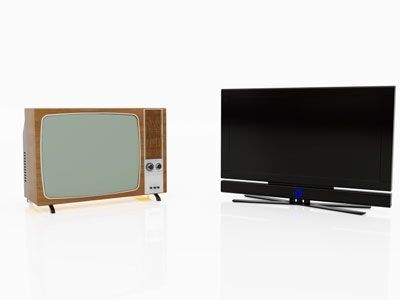
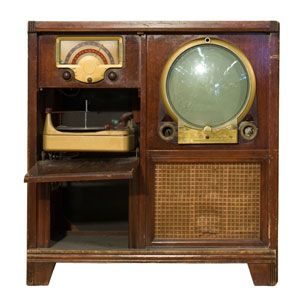
Since its inception, television has undergone a fundamental transformation, going from a minor novelty to a staple of the home in less than a century. If you’re curious about how we got from clunky vacuum tube devices to advanced smart displays, the journey began shortly after World War II.
In the late 1940s, the radio industry faced an existential crisis. As television technology matured and prices fell, it rapidly cannibalized the audio-only medium. Families don’t just listen anymore. they watched them. This change was immediate and far-reaching, marking the end of radio as the primary source of home entertainment and the explosive birth of television culture.
The programming environment is equally primitive, but very popular. Audiences flocked to the screens to watch a variety of shows that defined the comedy style of the time. Two programs dominated the airwaves. The Original Amateur Hour satisfies audiences’ thirst for local talent and authenticity, featuring Milton Berle at the Texaco Star Theatre. Berle’s high-energy, vaudeville-style performance earned him the title of “Mr. Television” and proved that live comedy could drive ratings.
This period laid the foundation for everything that followed. Turning the dial and watching a comedian perform live in your living room is a technological marvel that has changed the way society consumes media. What happened next set the stage for the color revolution and the digital age.
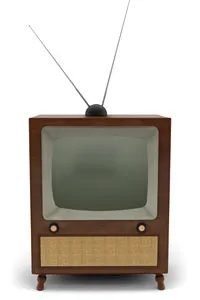
The TV boom of the 1950s
The 1950s was a key decade in the history of television, and it marked the transition from a novelty to a household staple. “Howdy Doody” was the first and most popular children’s show, capturing young viewers across the United States. Other shows include “I Love Lucy,” “The Honeymooners,” “The Lone Ranger” and “Leave it to Beaver.” In the late 1950s, almost 90 percent of American households had a television. Although most televisions were still black and white, this decade also saw the introduction of color televisions (and remote controls). Next, we will look at how the 1960s brought changes to the development of television.
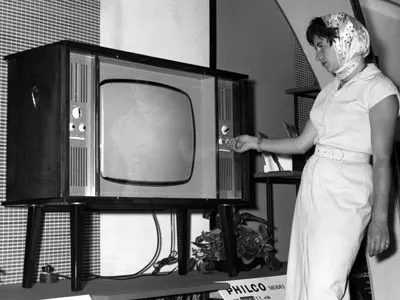
1960 Television landscape view
In 1960, the American television world changed dramatically. Prime time is no longer just news and variety shows. The Flintstones debuts as the second prime-time animated series. This was a breakthrough moment for cartoonists and animators who had long been confined to Saturday mornings. This show brings prehistoric humor to living rooms across the country.
In the same year, the first presidential debate was held on television in the United States. Visual media began to determine political strategy. Candidates can no longer rely solely on radio charisma or print platforms. Viewers can watch the candidates move, sweat and speak in front of the camera. This incident redefined the relationship between politicians and the people.
Other major series also appeared during this period. The Andy Griffith Show introduced viewers to Mayberry’s quiet charm. My Three Sons explores family dynamics through a different lens. Bewitched combines suburban life with supernatural elements to create a unique sitcom formula. Batman brings comic book action to TV every week. Meanwhile, Star Trek is gearing up for release and promises to take audiences to the final frontier.
These themes aren’t just family-friendly. Kagen’s essays are moving from vulgar passion to mainstream.
1960 was a time when the media began to reflect and shape culture in a new way. The innovations of these projects still resonate. They are changing the way stories are told and the way viewers interact with content. The legacy of this era is still evident in current programming trends.
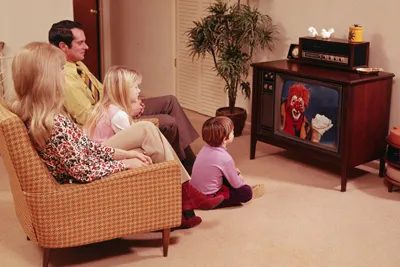
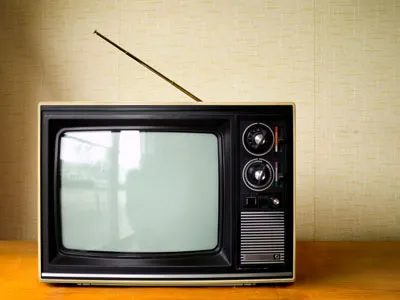
By the time the clock struck in 1967, most of the major networks had virtually completed the transition to color broadcasts. If you watch prime time, you’ll probably see tones instead of grayscale. This technological shift paved the way for the 1970s television aesthetic that defined the home entertainment world for the next decade.
Analog control and user interface
If you look closely at existing televisions from that era, you’ll notice that they have physical controls. clunky station dials is the main interface for changing the channel. For the average consumer, there is no such thing as a remote control. You had to get up. You have to turn the knob. You have to wait until the image stabilizes.
This haptic interaction means that viewers can directly interact with the hardware. The dial is large and usually made of textured plastic or metal. They provided a satisfactory amount of resistance. For many people, this mechanical feedback is an important part of the TV viewing ritual. It demanded attention. It did not allow for casual, background noise in the same way modern streaming does.
The show that defined an era
Programs during this period reflected changing social conditions. It was rawer. It was more controversial. This breaks a taboo that was strictly enforced in previous decades.
Popular shows that aired in this decade included All in the Family. This sitcom dealt with issues of racism, sexism and politics with the shocking humor of its time. It forced viewers to confront uncomfortable truths wrapped in punchlines.
Saturday Night Live launched in 1975 and changed the world of comedy forever. It brought live sketch comedy into the living room, offering a fresh and irreverent perspective on current events and culture.
Happy Days became a cultural touchstone and evoked 1950s nostalgia during production. Its catchphrases has entered the everyday vocabulary.
The Brady Bunch shows an ideal, sanitized version of family life. It was light, predictable and comfortable. It’s a stark contrast to the gritty stories seen in other shows.
Sesame Street revolutionized children’s programming. Using educational psychology to teach literacy and numeracy. This proves that television can entertain and instructive at the same time. Its influence on early childhood education is still significant.
Why is it important?
These shows are more than just fun. They shape the conversation. They influenced fashion. They changed the way people discussed social issues. In the 1970s, TV set was a central hub of the family. This is where news is consumed, laughter is shared and debates were ignited.
The combination of color broadcasts and innovative content created a unique cultural moment. Viewers get to see a wider perspective than ever before. The technology allows for more vivid storytelling. Content breaks boundaries.
This era laid the foundation for today’s television industry. Forms created in the 1970s, such as sitcoms, sketch comedies and educational programs for children, still dominate the screens. Physical dials may be gone, replaced by buttons and screens, but the legacy of early digital-era broadcasts lives on.
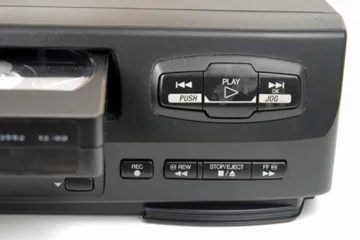
Magnetic rewind: How the VCR view changes
The 1970s brought us more than bell-bottoms and discos. Through the VCR, it fundamentally changed the passive nature of television. Before this technology, television was a schedule-driven medium. When the show is on, see what’s on. Don’t miss the show? Too bad. The video cassette recorder (VCR) broke this linear limitation and first introduced the possibility of recording television broadcasts. This is not only convenient; This is a transfer of power from broadcasters to viewers.
Suddenly time-shifting became possible. You can also save shows to watch later, skip commercials and even pause live broadcasts if your device allows it. This turned television from a one-time event into a tangible, repeatable experience. The tapes become a personal library, allowing users to manage their own binge-watching habits instead of following the network grids.
This innovation laid the foundation for modern on-demand culture. Without the VCR, the concepts of binge-watching and streaming libraries might have evolved differently or even more slowly. The ability to capture and play media created a new relationship with content based on ownership and control rather than mere observation.
What happens next?
The VCR laid the groundwork for the next evolution of home entertainment. As technology matured and the market sought to increase convenience, the industry turned its attention in the 1980s. That decade ushered in higher fidelity, digital interfaces, and the beginning of the end of the analog tape era.
Next, let’s look at 1980s television.
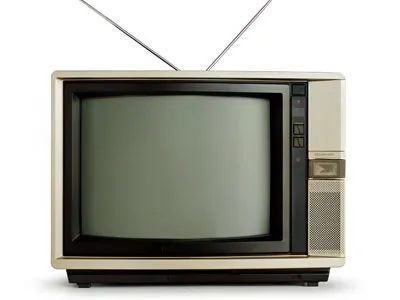
1980s: The golden age of the remote control and sitcoms
Cable television exploded in popularity in the 1980s, casting a long shadow over traditional network television. The introduction of affordable remote controls has fundamentally changed the way viewers interact with content, giving them unprecedented options to change channels and skip commercials. This era was also defined by the rise of soap operas and the golden age of sitcoms. Iconic shows like “The Cosby Show,” “Cheers” and “Family Ties” dominated the ratings. Meanwhile, The Simpsons first aired in 1989, setting the stage for the longest-running American sitcom of all time. As the decade draws to a close, even greater changes can be expected in the coming years.
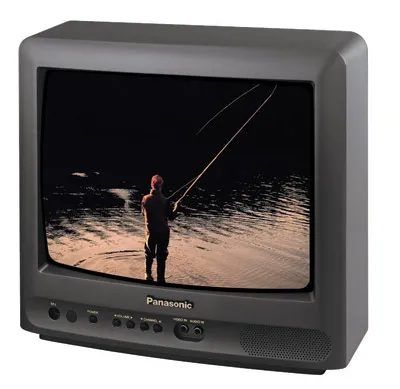
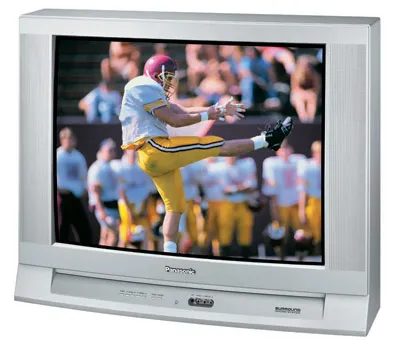
The CRT monopoly of the 1990s
By 1996, the number of televisions in the world had reached one billion. Seinfeld dominated the ratings. After 30 years, Johnny Carson has finally retired from the Tonight Show. The screen is the media. The content has been changed. The hardware is not.
For most of the 1990s, one technology ruled the living room. A cathode ray tube (CRT) draws images. It is very heavy. It’s very deep. It shines brightly.
Flat screens are a rare exception. Most families bought boxes. The tube behind the glass defines the shape of the room. Cannot be hung on the wall. You have to make room for them.
This is the default entertainment mode. Until it isn’t.
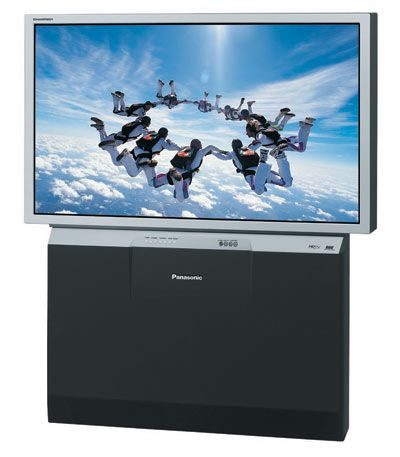
The era of rear projection
Before flat screens became common, a rear projection CRT was the only way to display a large screen without filling your living room. In these large devices, the projector and screen are combined in the same housing. The light reflects from the back of the screen and projects the image forward. It’s big. It is very heavy. But it worked. In the late 1990s, engineers were already testing the next big change in display technology.
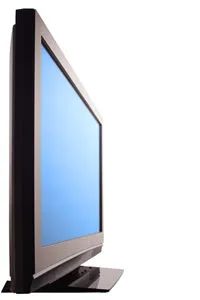
The rise of plasma in the late 1990s
Plasma televisions appeared on the market for the first time in 1997. The basic principle of a plasma screen is to create an image by illuminating tiny, colored fluorescent lights. It is very popular because of its slim shape.
How Plasma Technology Actually Worked
Unlike LCD screens, which eventually became a mainstay of living rooms, Plasma panels did not rely on backlighting through liquid crystals. Instead, each subpixel contains a small cell filled with an inert gas such as neon or xenon. When high-voltage electricity passes through these cells, the gas is ionized into plasma. In this state, ultraviolet light is emitted and hits the phosphor coating on the cell walls, causing them to glow red, green, or blue.
The result is deep blacks and high contrast not possible with early LCD screens. This technology is basically a grid of millions of tiny fluorescent tubes. Although it sounds simple, the engineering required to control each unit is complex. And expensive.
Why slim design won Users Over
In the late 90s and early 2000s, thickness was a status symbol. Although plasma TVs have large screens, they are surprisingly thin. Mounted on the wall, it looks like a floating canvas rather than a large device. This aesthetic appeal encouraged early adoption, even though it was more expensive and consumed much more power than its CRT counterpart.
However, the technology has limitations. The heat output is high because the cells must be constantly refreshing to maintain the plasma state. Image quality in dark rooms was stunning, but brightness in sunny rooms is often not as bright as competing technologies. Still, plasma defined the premium home theater experience for a decade.
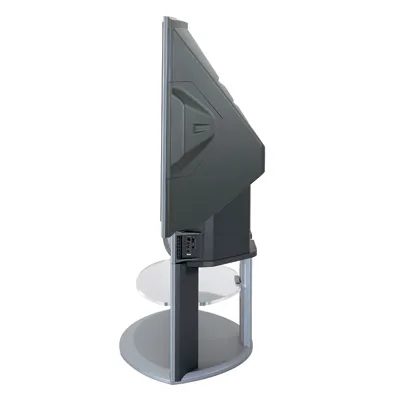
Rear projection LCoS TVs were another option on the market, but they came with a specific set of trade-offs. Unlike front-facing screens, these devices work by directing light through a bank of polarizers. Polarizers can be thought of as special filters that force light waves onto a single, organized path before reflecting them. The processed light is amplified and projected back onto the screen from inside the cabinet.
The results are undeniable. The image quality is excellent for its time. Superior color accuracy and contrast compared to previous CRT and plasma models.
Good image quality does not necessarily mean cheap.
There was a catch. These units are very expensive to buy. Complex optics and large housings drove production costs through the roof and put them out of reach for most consumers. You’re paying for a premium viewing experience that requires a dedicated space in your living room.
This price point is important if you’re researching retro technology or trying to understand why certain displays disappeared. Why couldn’t they conquer the market? Simple economics. As flat screen technology advanced, the prices of LCD and LED panels dropped. Rear projection systems could not compete with shrinking price tags of slimmer alternatives.
Read more about LCD TVs below and see how they eventually made high-quality displays available to everyone.
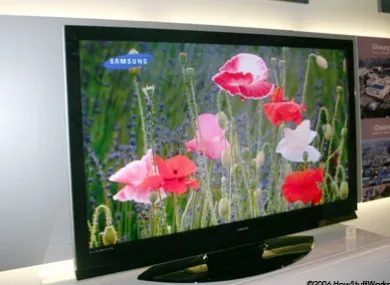
Why LCD is better than plasma in terms of efficiency and clarity
Liquid crystal displays (LCD televisions) are based on intelligent intermediate layers of materials. The light source is a backlight, and there is a liquid crystal layer in front of it. These crystals themselves do not emit light. Instead, they rotate and untwist, blocking or allowing photons to pass through the color filter. The result is a picture.
Calculating energy is easy. LCD TVs used less power than plasma TVs, which were their main competitors at the time. Plasma panels require high voltages to excite the gases in the small cells. The LCD only needs a stable backlight and a low voltage signal to move the crystal. This difference in efficiency is significant. This means that your electricity bill will be cheaper. This means less heat in the living room.
Resolution tells a different story. LCD screens generally provide sharper images than older plasma devices. The pixel structure of LCD panels is denser. Graininess becomes less noticeable. For viewers watching HD broadcasts, the difference is obvious. The picture looks good. The text becomes clearer.
But market timing is a real hurdle. In the 1990s, this technology was still in its infancy. The screens were bulky. The colors were often washed out. The slow response time causes motion blur in fast scenes. Consumers are hesitant. Plasma uses more power but seems to offer better contrast and deeper blacks. That’s why LCDs didn’t dominate the sales charts in the 90s. They sit in the shadows.
Then came the next 10 years. The scope of production expanded. Costs are coming down. Image quality improves quickly. The technology on the following page was successful. Suddenly, everyone wanted an LCD screen. This change is not just about specs. It’s all about availability and price. As the supply chain caught up, LCDs took over the market. Plasma is still a niche market. LCD has become the standard.
The transition marked a pivot in the way we see things. Less heat. Sharper details. Lower running costs. The liquid crystal layer did the heavy lifting. The backlight remains unchanged. The result is a display that can be installed in several homes without tripping the fuse box.
Why does plasma disappear so quickly? It couldn’t match the manufacturing momentum. The LCD approach is easy to scale. Panels can also be manufactured in small factories. Prices fell faster. Consumers quickly realized its value. The superior contrast of plasma cannot overcome the advantages of scale.
We were not aware of the quiet revolution that took place in the 1990s. We noticed this when every store had flat screen TVs. Liquid crystal layers are becoming ubiquitous. It changed the living room. It changed the industry.
Digital conversion and hidden features
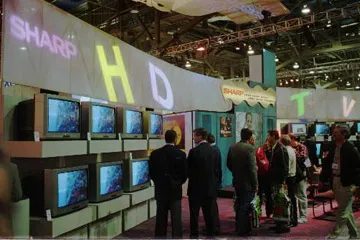
HDTV was introduced in 1998. It’s not just about making the picture clearer. It changes our perspective on everything. The analog signal is lost. The digital age has arrived. The difference between day and night.
However, other changes took place behind the scenes. At the same time, television benefited from new technology. These are not just solutions. This is how the TV processes what you watch. This is more important than most people realize.
“Digital signals reduce noise. Digital signals eliminate static. That’s why old CRTs look grainy. New HDTVs don’t.”
This is more than just an update. This is a rewrite of the rules. Broadcasts changed. Cable companies also adapted. The audience noticed the clarity. However, they did not notice any changes in the background. These later enabled smart functions.
The transition to digital can be a real turning point. It’s not the screen size. Not the bezel. The signal itself. You can express colors better. Deeper blacks. The sound is now clearer. All this can be achieved without making too many changes to the hardware.
Just then another wave hit. embedded chip. A smarter processor. These features won’t make headlines, but they will change the way you use your TV.
Transition to digital storage and high resolution
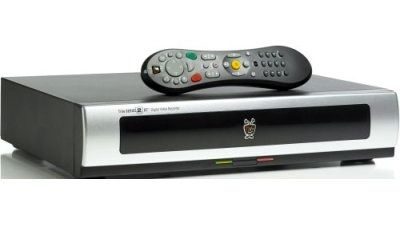
In 1999, the world of home entertainment changed forever with the introduction of the first digital video recorder (DVR). This device changed the way we consume content by allowing programs to be recorded directly to the hard drive, effectively killing the VCR tape. This allows viewers to pause, rewind, and skip ads, a feature that became standard in the 2000s.
The cultural giants have dominated television ratings for the past decade. “Survivor,” “Friends,” “CSI” and “American Idol” are among the most-watched shows on television and garner attention across the country. These shows defined the programming landscape at the time, with ratings comparable to today’s streaming metrics.
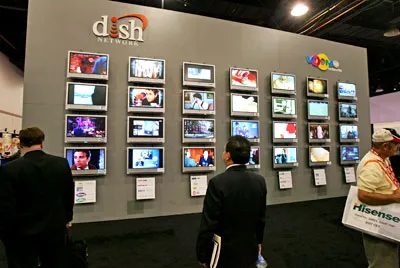
At the same time, the hardware evolved. Companies such as DISH Network and DIRECTV began rolling out high-definition channels. As HDTV became more popular, the definition of “clear picture” changed overnight. The grainy standard definition of the 1990s gave way to sharper and more detailed visuals, paving the way for the next era of high-definition streaming.
At the dawn of the LED-DLP era
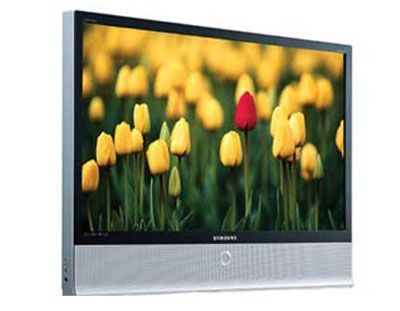
You may remember a lot of what happened recently, but the sudden change in the way we watch TV is very apparent. In 2006, the market changed dramatically with the introduction of the first commercial LED-based DLP HDTV. This is more than just a small update. It’s a game changer for home theater enthusiasts who want a big screen without spending a lot of money.
How the technology really works
To understand why this is important, we need to look inside. Digital Light Processing (DLP) The technology is not new. It was invented in 1987 and is based on a specific optical semiconductor called a digital micromirror device (DMD).
Here’s how it works: Inside the projector are thousands of tiny aluminum mirrors arranged on a chip. Each mirror represents a pixel. They tilt back and forth sharply, reflecting light towards and away from the screen. By adjusting the timing of these tilts, the system creates a grayscale image that combines with the color of the light source to form the image displayed on the wall.
In these early LED models, the light source was an array of light-emitting diodes rather than the bulky and hot mercury lamps used in traditional front projectors. This makes the device smaller and more efficient.
The price factor that changes everything
The real reason for the popularity of these kits is not just their specifications. This is a financial issue. When these LED-DLP TVs hit store shelves, they were significantly cheaper than the two leading options at the time: flat-panel plasma TVs and LCD TVs.
Plasma screens offer better contrast and black levels, but are expensive. Early LCD screens were thin, often suffered from motion blur and had lower contrast than plasma. DLP, on the other hand, offers an attractive balance. You can get a large screen (usually 100 inches or more) for a fraction of the price of a plasma screen of the same size.
“DLP TVs are cheaper than flat-panel plasma and LCD TVs.”
This price difference is forcing many consumers to reconsider the value of their televisions. Do they want a slim tile that can be the focal point of their entertainment, or do they want a huge, immersive image that can fill an entire wall affordably? For most of the market, the answer is clear.
Why is it not the default anymore?
2006 was a revolutionary year, but things changed quickly. As LCD manufacturing technology improves and prices drop, the cost advantage of DLP starts to diminish. LED-backlit LCDs began to offer better brightness and reliability, filling the gap in image quality compared to what DLP originally offered. The unique mechanical properties of DMD chips also mean that over time, some users will encounter problems such as the “rainbow effect” and lamp degradation that do not occur with solid state LED displays.
Still, DLP retained its status as the king of value, albeit for a short time. This democratized big screen viewing and made it possible to build home theaters that previously required a second mortgage. This technology did not disappear overnight. It just moved into the premium home cinema niche, where dedicated

150 inch plasma absurdity
HD is more than just a sticker on a small screen. It expands to the point of absurdity. Matsushita Electric Industrial Co., Ltd. pushing the limits of advanced high-definition plasma displays.
It is 150 inches.
Yes, it’s 150.
It’s not television. This is the center of the small auditorium. Or a very large living room with no other purpose. Matsushita, now known as Panasonic has proven that plasma technology can handle HD resolution even at large sizes.
This is not a matter of convenience. It was about presence. While most of us are talking about 42-inch TVs, Matsushita was building screens that require their own zip code. The Advanced High-Definition Plasma Display have shown that pixel density can be maintained even as the physical footprint grows enormous.
Who bought it? Maybe a museum or a company lobby? Or people who wanted to watch a football game and want the ball to fill your entire vision.
This highlights the simple fact of HD’s early adoption. Bigger doesn’t just mean better. This is a statement.
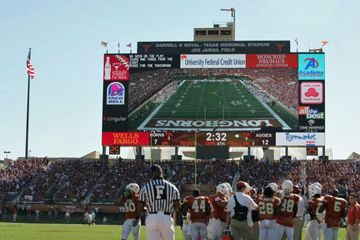
The era of large televisions is in full swing. Throughout the 2000s, screen space continued to expand, pushing the limits of what families could tolerate in their living rooms. By November 24, 2006, the annual rivalry game between Texas and Texas A&M had reached absurd proportions. The stadium featured a gigantic display called “Godzillatron,” which became its own cultural meme, proving that bigger is not only better, but necessary.
But while fans stare at this giant screen, quieter and more important changes are taking place in the tech industry. The next generation of TVs is coming, and it’s not just about size. It’s about integration.
Integrate your computer and TV
The end of the 2000s marked the beginning of the Smart TV era. Manufacturers began to combine computer hardware with traditional televisions to create devices that did more than just receive broadcast signals. This is not just an incremental update. It is a fundamental change in the way people consume media.
“Godzillatron” represents the pinnacle of the analog broadcast-driven world. It is a spectacle on a grand scale. New smart TVs represent the future of connectivity. Bring the internet into your living room and let users use streaming services, browse the web and interact with applications right on their screen.
This convergence changes the role of television from a passive receiver to an active hub. You no longer need a separate box or computer to access your digital content. The TV itself becomes the user interface.
Why size is so important
The whole obsession during this period was due to the transition from CRT monitors to flat screens. As LCD and plasma technology developed, costs fell and larger screens became easier to use. The Texas vs. Texas A&M game amply demonstrated this trend. If it’s good enough for a college football game, it’s good enough for your living room.
But real innovation isn’t inches. This is software. The integration of computing power allows you to upgrade, customize and connect your TV. This sets the stage for the streaming wars that will define the next decade.
Change your user experience
For the average user, the changes are subtle at first. You should watch broadcasts. However, the menu options have gradually increased. Can be connected to a laptop. You can access Netflix or Hulu directly from the TV interface. The difference between a computer and a television is starting to blur.
The big screens of the mid-2000s provided the canvas. Smart technology provided the paint. Together, they created a new standard for home entertainment. Godzillatron is the flash of glory for the old way of watching. Smart TVs are the promise of a quiet future.
But questions remain. Are people actually using these new features or are they just buying bigger screens for the same old shows? It will take another decade before the answer is completely clear.
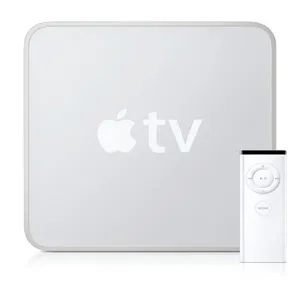
Connecting an Apple computer to an HDTV
The first generation Apple TV started shipping in the spring of 2007. Apple positioned this device as a bridge. It leveraged of your desktop or laptop’s processing power and fast internet connection to stream your data directly to the big screen. The goal was simple: It leveraged of HDTV’s high-resolution screen and take your media consumption beyond a traditional cable box.
The setup requires a computer. Connect iTunes to your hardware. This integration allows users to stream content directly from their local library. Movies appeared movies on your TV. Television shows played TV series on the big screen. You can now watch YouTube videos became watchable on a big screen, which was clunky to watch directly on a computer screen. This device turns your standard living room entertainment system into a digital media center.
Why this matters in early streaming
This launch marked a shift in the way people consume digital video. Before this, watching downloaded content on a TV required a complex array of cables and adapters. Apple TV simplifies this chain. It recognized the value of a centralized media server. Users can organize their playlists in iTunes and push them to the living room screen without leaving the couch.
The inclusion of YouTube is especially important. In 2007, online video was still maturing. Having a dedicated box for to pull those streams to a 40 inch screen feels like a glimpse into the future. You can do beyond just watch downloaded movies. It’s about accessing the Internet’s growing library of video content through a familiar interface.
The role of hardware in early smart TVs
This device did not completely replace computers. It relied on it. The computer handled for decoding and library management. Apple TV acts as a receiver and renderer. This architecture was different from modern smart TVs or streaming sticks. Relying on a nearby Mac or PC defined its early utility.
the product offers HDTV users a way to unify their digital lives. Photos, music and videos are all in the same ecosystem. Pulling them on the TV screen brings new convenience. It set laid the groundwork for a standalone streaming service, but in 2007 the tether to a computer was essential.
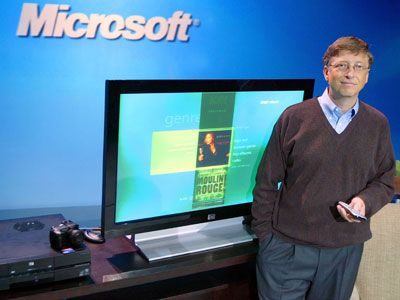
For those who want their computer to be the focal point of their living room, the obvious choice is Windows XP Media Center Edition. It is more than just an operating system. It’s a bridge. This software allows users to transfer videos, music and photos directly from the hard drive to the TV. Just sit on the sofa and control everything with the remote control. The computer does the heavy lifting and the TV just shows the results.
This is a special fusion. This is a method that prioritizes content delivery over processing power.
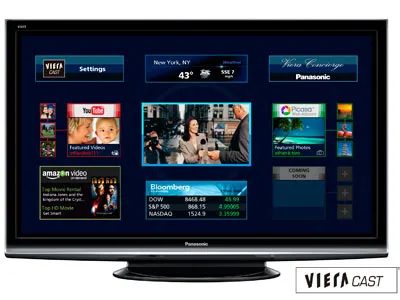
And then there’s the hardware way. Panasonic saw the same trend but reversed its approach. Instead of forcing the TV to act like a computer, they made the TV internet-capable into the TV itself. Their Viera Cast platform is the star here. It turned standard televisions into a smart device. No need for an external box. No complex PC setup. All you need is a TV that can connect to the Internet.
These two solutions aim to achieve the same goal: easily displaying digital content on a large screen.
The other side relies on Media Center Edition software to extend the reach of your computer. The other embedded connectivity directly into the panel. Which option makes more sense depends on where you live and what you already have.
This change is not just a matter of technology. It’s a matter of getting used to it.
“The interface had to work with a remote, not mice.”
This distinction is important. Keyboards are not suitable for coffee tables. A remote control is essential for a sofa. Both Microsoft and Panasonic understand this and have built their interfaces around convenience. More than just connectivity.
The result is a chaotic but necessary transition period. We learn what works. And what didn’t. The Viera Cast system is often praised for its simplicity. Media Center Edition offers depth. You can record TV. Manage your library. However, it requires a computer that is always on. Always close. Always humming.
Neither solution is perfect. Both are smart home prototypes.
The lines blur. Quickly.
Soon the distinction between “PC” and “TV” began to feel arbitrary. No more asking which device should process your content. We just expected it to appear.
The hardware is constantly evolving. The software will follow. But the core problem remains.
How can we hide technology in the background?
It’s still an open loop.
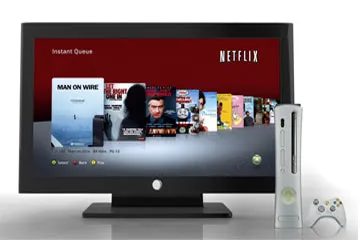
When the console becomes a media center
Living room hardware isn’t immune to the streaming wars either. Video services expanded rapidly, and Netflix moved into unexpected hardware areas. No more sitting in front of a computer or a separate streaming stick. If you have Xbox 360 and Xbox Live Gold membership, you can log in directly to the service. You can stream movies and TV shows directly on the big screen.
This turns your console from just a game box into a versatile entertainment center. Users can bypass the computer entirely. Just turn on your Xbox, sign in, and start playing. This is a simple change that will change the way you consume content. No need to wait for the desktop to start when the console is already running.
Integration is very easy. Gold subscribers have access to the app. They can browse their queue. They can watch whatever they want. It’s not just about playing multiplayer anymore. About the whole evening. The boundaries between playing and watching are blurring. It stuck.
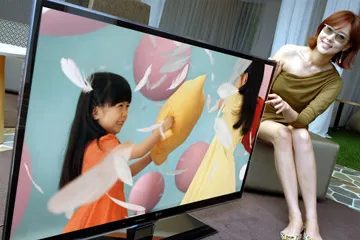
How an active 3D TV signal actually works
The hardware side of 3D TV is based on a certain connection method that is often overlooked. It starts with a standardized 3-pin plug. This small connector plugs directly into a special port on many 3D TVs and monitors. From there, the cable runs to the infrared (IR) transmitter.
That transmitter is the unsung hero of the show. It broadcasts signals directly to the active 3D glasses. The glasses receive these instructions and synchronize the shutter speed with the refresh rate of the screen to create the effect of depth. This is a simple physical link that many users overlook when troubleshooting glasses that don’t work.
If you want to better understand how this technology fits into the wider field, you can test your knowledge using tools like the Classic TV Challenge to reveal the evolution of these standards. For technical details, the TV Technology Channel provides detailed information on how these screens work.