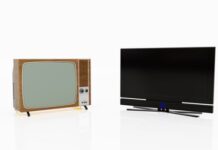
Imagine an 80-inch television. It weighs next to nothing, costs a fraction of the price of the standard model, and can be rolled up like a poster when you’re done. Or Imagine a navigation system projected directly onto your windshield or a smart screen built into the jacket. This is not science fiction. This is the tangible future of organic light emitting diode technology.
OLEDs represent a fundamental change in the way light is produced for screens. Unlike traditional LED or LCD panels, which are based on large layers of backlight, OLEDs are semiconductor devices made from thin films of organic compounds. When you apply electricity to these molecules, they glow. The resulting display is not only thinner than a quarter of an inch, but also more energy efficient than the displays dominating the market today.
Why OLEDs are more efficient than traditional screens
The main advantage is in the structure. Standard LCD screens require a constant light source behind the screen to illuminate the pixels, which consumes energy and limits contrast. OLEDs produce their own light at the pixel level. This allows for true black as individual pixels can be completely turned off. You don’t need to force light through filters or boost large backlight arrays, resulting in sharper contrast, sharper colors and lower overall power consumption.
For consumers, this means brighter images, deeper shadows and longer battery life for portable devices. For manufacturers, it opens the door to flexible, rollable and even wearable electronics. This technology is now mature enough to produce HD panels, but it holds the key to form factors that we are only just beginning to consider.
There is an obstacle ahead
Despite this promise, OLED is not a panacea. This technology faces significant hurdles before it can replace all screens in the home. Organic materials are sensitive to oxygen and moisture and require expensive encapsulation processes to prevent degradation. Lifespan is another issue, especially since blue pixels tend to wear out faster than red or green pixels.
Manufacturers are still trying to balance cost, durability and performance. The potential for curved TVs and foldable phones is certainly there, but widespread use depends on solving these longevity and production issues. The technology is here. This is just the beginning.