The central question of the ongoing lawsuit between Elon Musk and OpenAI is no longer just about corporate governance or financial structures. It has narrowed to a singular, pivotal issue: Can Sam Altman be trusted?
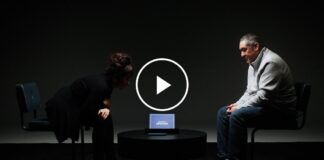
During depositions in a California federal court, the OpenAI CEO faced a rigorous examination of his past statements, particularly those made during his 2023 testimony before the U.S. Senate. The proceedings highlighted a stark contrast between Altman’s public persona as a humble technocrat and the complex financial realities of his role at the world’s leading AI company.
The “No Equity” Claim Reexamined
The courtroom drama began by revisiting Altman’s May 2023 appearance before Congress, where he testified on AI regulation. Senator John Kennedy of Louisiana had questioned whether Altman was sufficiently detached from commercial interests to lead a hypothetical AI regulatory agency.
Altman’s response was memorable, if controversial. When asked if he was wealthy, he replied, “I’m paid enough for health insurance. I have no equity in OpenAI.” Senator Kennedy’s dry retort—“You need a lawyer” —was met with laughter, but the statement has since become a focal point for Musk’s legal team.
In the deposition, attorney Steve Molo pressed Altman on this claim. Molo pointed out that while Altman may not hold direct shares in OpenAI Inc., he possesses significant economic exposure to the company through his limited partner (LP) position in Y Combinator, a venture fund that holds stakes in OpenAI.
“You didn’t disclose to the United States Senate that you had an interest in OpenAI through a share in a Y Combinator fund, did you?” Molo asked sharply.
Altman maintained that he believed his passive ownership was “well understood” in the venture capital context and that he did not consider it necessary to disclose such indirect interests to the Senate. However, Molo challenged this interpretation, suggesting that Altman’s failure to clarify his financial ties misled a senator who was not a sophisticated investor.
The Shadow of the “Blip”
The interrogation extended beyond financial disclosures to the infamous December 2023 event known as the “blip,” when OpenAI’s board briefly fired Altman and removed Greg Brockman as board chair. The board cited a lack of candor as the primary reason for the dismissal.
Molo presented a litany of accusations against Altman, including sworn testimony from former board members Helen Toner and Tasha McCauley, as well as statements from co-founder Ilya Sutskever and Elon Musk. McCauley described a “toxic culture of lying” within the company, a characterization that directly impacts the jury’s perception of Altman’s honesty.
When asked if he believed the board’s stated reason for his firing was the full truth, Altman expressed doubt. However, when pressed to acknowledge that the board explicitly cited his lack of candor, he deflected by noting, “They asked me to come back the next morning.”
This incident is critical to the trial’s broader narrative. Musk’s legal team argues that the firing demonstrates Altman’s excessive influence over the company, effectively bypassing the nonprofit board’s authority. If the CEO cannot be fired for dishonesty without immediate reversal, the nonprofit structure may be a facade.
Control vs. Influence
The trial hinges on whether OpenAI’s nonprofit board exercises genuine control over its for-profit subsidiary, or if Altman operates as a de facto sovereign entity.
Witnesses for OpenAI and Microsoft have defended the current governance structure. Microsoft CEO Satya Nadella dismissed the firing as “amateur city,” while Bret Taylor, who joined the board as chair after Altman’s reinstatement, stated that he found no evidence warranting Altman’s termination and described the CEO as “forthright.” Dr. Zico Kolter, a board member focused on AI safety, added that no one has interfered with safety work since 2024.
However, Taylor also revealed a crucial detail: Altman was rehired because his departure would have caused a mass exodus of employees, effectively ending OpenAI as a going concern. This admission raises a significant question for the jury: If the board cannot discipline the CEO without risking the company’s survival, does it truly have control?
The Verdict on Trust
As the trial concludes, the jury and Judge Yvonne Gonzalez Rogers must weigh these conflicting narratives. Altman’s credibility is not just a matter of personal character; it is the linchpin of OpenAI’s legitimacy.
When asked if he would ever fire himself, Altman said he had no plans to do so. When asked if he could be trusted, his answer was unequivocal: “I believe I am an honest and trustworthy businessperson.”
Conclusion: The trial has transformed a corporate dispute into a referendum on leadership integrity. While OpenAI argues that its structure is sound and its CEO transparent, Musk’s team suggests that Altman’s financial ties and history of miscommunication undermine the nonprofit mission. The final judgment will determine not only the outcome of the lawsuit but also the future governance model of the most powerful AI company in the world.