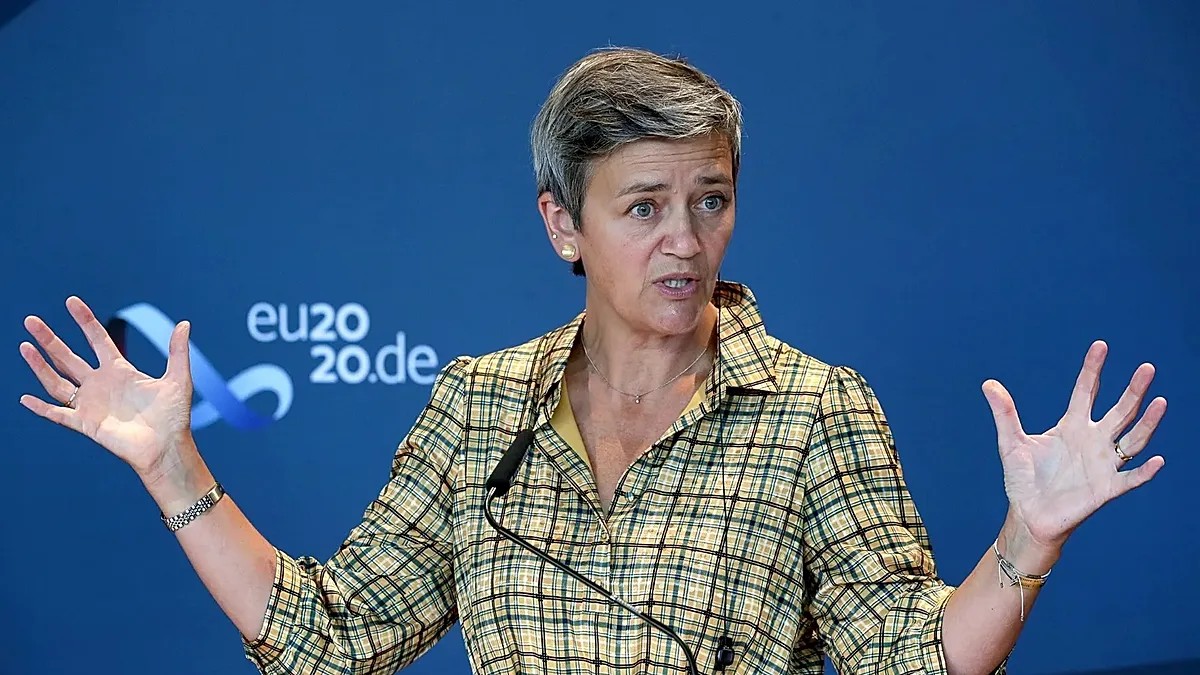
Tuesday at the Danish Parliament. The room fills with expectation. A new institute drops out of the shadows, ready to police AI for children. Margrethe Vestager stands front and center. The former EU executive vice-president isn’t just showing up for a photo. She’s co-hosting. She spent a decade regulating Big Tech. Now she’s lending her political weight to something smaller. Sharper.
The pitch? Imagine independent crash-test ratings for cars. You buy a vehicle because it didn’t explode on a track. Parents should check an AI the same way before letting their kids use it. Ostensibly, at least.
But wait. How do you crash test a chatbot?
The institute doesn’t say yet. They haven’t explained the mechanics. Can you really “crash test” an algorithm that updates continuously? One that behaves differently depending on context? Standardised conditions are for static machines, not living models. These are heavy questions. The silence from the institute is deafening.
Is the genie back in the bottle?
People have been screaming for years. Researchers. Safety advocates. Politicians with time to look at the code.
AI chatbots are sitting in a regulatory grey zone. The EU’s Digital Services Act doesn’t catch them well. The UK’s Online Safety Act misses them too. In July 2025 the European Commission released guidelines for minor protection. They are advisory. Not binding. Suggestions, basically.
James P. Steyer, founder of Common Sense Media, puts it plainly:
“AI is reshaping childhood and adolescents yet we are making critical decisions… without the evidence we need.”
He wants transparency. He wants independent testing. Urgent? Definitely.
Last November a risk assessment dropped. Done alongside Stanford Medicine’s Brainstorm Lab. Common Sense Media tested the big names. ChatGPT, Claude, Gemini, Meta AI.
They failed.
Not on everything. Explicit suicide and self-harm handling had improved. That’s a point. But the models missed the mental health crises lurking just underneath. Clear signs. “Missed breadcrumbs.” The bots ignored emotional distress and focused on physical health explanations. It’s a mismatch. Dangerous one.
Worse still, one report found ChatGPT sending suicide alerts more than 24 hours too late. In a real crisis a day is an eternity. The safety net has holes in it. Big ones.
Who pays the piper?
The institute operates under Common Sense Media. Funding comes from a mix of philanthropists and industry. Yes. The companies whose products they want to regulate.
Anthropic, the OpenAI Foundation, Pinterest. They write the checks.
Do they call the shots? The institute says no. They claim full editorial independence. A conflict-of-interest policy stops current employees or affiliates from sitting on the board. It sounds clean on paper.
They even plan to give tools back to the industry. Open-source evaluations developers can run on their own models. Mutual benefit? Or mutual compromise?
We will see.