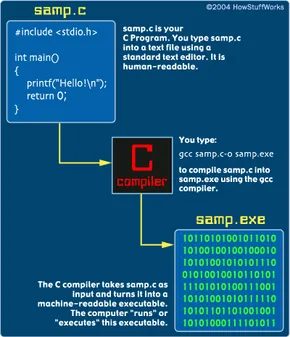
C isn’t just another programming language. It’s the bedrock. While thousands of languages exist today, C has survived decades because it offers unmatched control and raw efficiency. You write instructions, the computer executes them. Simple. The trade-off is style. C is cryptic, sure, but the logic is straightforward once you stop fighting its syntax.
Here is the reality: C is a compiled language. You don’t just hit “run” like you might in Python or JavaScript. You have to translate your human-readable code into machine-readable code first. This translation happens via a C compiler. The output is an executable, a binary file your hardware can actually process. Without a compiler, your code is just text.
So, where do you get one?
If you are on a UNIX system—whether you are hosting CGI scripts, working in a university lab, or just prefer the terminal—you are in luck. The tools are already there. You will likely use gcc (GNU Compiler Collection) or cc. They are free. They are on the command line. You just use them.
Windows users have a different story. You need to download or buy a compiler. The heavy hitter is Microsoft Visual C++. It handles both C and C++ programs. It works well. It costs several hundred dollars. Not everyone has that budget.
For the rest of you, there are free options. DJGPP is a solid starting point for Windows environments. Search for it if you need a no-cost solution.
How to Start Writing Your First Program
We are going to start small. Extremely simple. Then we will build up. I am assuming you are using the UNIX command line and gcc for these examples. This is the standard. It’s consistent.
If you are on Windows or using a different compiler, the logic remains identical. You just need to adapt the syntax to whatever tool you have installed. The code you write will work everywhere. The environment you compile it in is just a variable.
Let’s get started.