It is a cliché in the industry, but it holds true: C is the lingua franca of computing. While thousands of languages exist for building applications, C stands alone as the most widely used programming language worldwide. From the silicon in microcontrollers to the core of major operating systems, C is everywhere. Its popularity stems from a unique combination of flexibility and versatility. It offers developers maximum control with minimal commands. If you are serious about a career in software development, starting with C is not just a suggestion. It is a strategic move.
The Universal Language of Code
There are many reasons to learn C, but one stands out above the rest. C is recognized globally. It powers advanced scientific systems, embedded devices, and the very operating systems you use daily. In a world where developers collaborate across borders, language barriers can be a hurdle. Verbal languages differ. C does not. It is a universal syntax. Even if colleagues cannot speak the same spoken language, they can read the same code. This shared understanding accelerates collaboration and reduces friction in international teams.
Learning C also provides a foundational advantage. It is the base layer for many advanced languages. Take C++ for example. It is an object-oriented language that builds directly on C’s architecture. You cannot master C++ without a solid grasp of C first. Once you internalize C’s logic and structure, picking up other specialized languages becomes significantly easier. The syntax may change, but the underlying concepts remain familiar.
Compiled Performance and Tooling
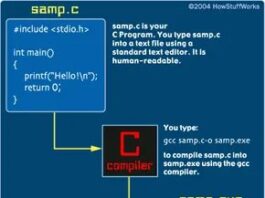
Programming in C is relatively straightforward. It relies on basic English-like commands that are easy to read. However, C is a compiled language. This distinction matters. You cannot simply run your code by opening it in a browser. You must write instructions, then run them through a compiler. The compiler transforms human-readable text into machine-readable binary. This process ensures efficiency and speed.
Finding a compiler is simple. If you are a student using a university UNIX system, you likely have access to a free compiler. For those outside academia, options abound. Microsoft’s Visual C++ environment is a robust choice, capable of compiling both C and C++ programs. It is a paid solution but widely adopted in professional settings. There are also numerous free web-based compilers available for quick testing and learning.
Real-World Applications and System Control
What exactly can you build with C? The list is extensive because C operates at the system level. It develops the core components of operating systems like Windows, UNIX, and Linux. It is also used for stand-alone applications that run without constant network dependency.
Key applications include:
– Compilers and interpreters
– Assemblers
– Text editors
– Print spoolers
– Network drivers
– Database management systems
– Language interpreters
Programming languages, in general, allow computers to execute specific tasks. They translate human intent into machine actions. C does this with precision. It gives you the tools to write a set of instructions the computer can follow without ambiguity. This control is why it remains relevant decades after its inception.
Why It Matters for Everyday Users
You might not write C code, but you interact with it constantly. Every time you boot your computer, a C-written kernel starts the process. Every time you use a database, C is likely managing the memory. Every time you connect to a network, C drivers are handling the handshake. Understanding C helps you understand the reliability of your software. It explains why some systems are faster. It clarifies why certain bugs are harder to fix. It is not just about syntax. It is about how the machine thinks.
The landscape of software is changing. New languages emerge every year. They offer higher-level abstractions and easier syntax. But they often sit on top of C. They rely on it. To truly understand the stack, you need to look at the bottom. C is that bottom. It is the foundation. Ignoring it means building on sand.
Is it the easiest language to learn? No. Python might be friendlier for beginners. C demands discipline. It requires you to manage memory explicitly. It forces you to understand how data moves through the system. This is a steep learning curve. It is also a rewarding one.
The benefits are clear. Global recognition. Foundational knowledge. Direct hardware control. These are not minor perks. They are