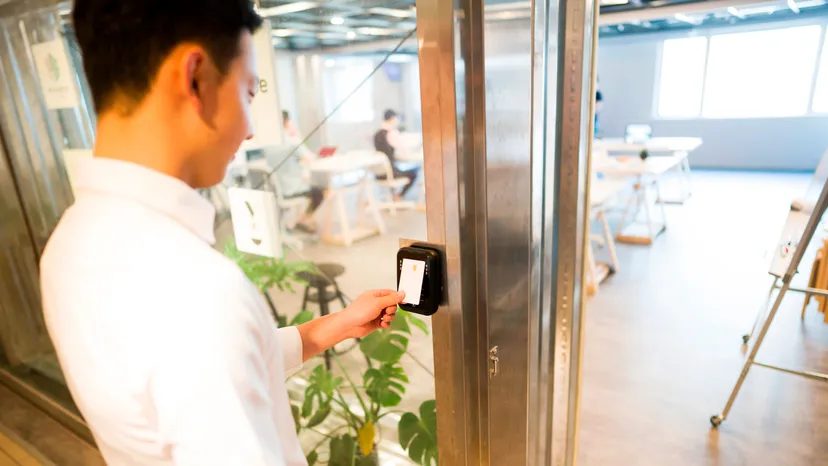
Security passcards are everywhere. You swipe them at office turnstiles. You tap them at hotel locks. They are the physical key to restricted spaces. But few people stop to think about what is actually happening inside that plastic rectangle.
These cards generally fall into two camps. There is general access. This means the card is anonymous. It doesn’t know your name. It doesn’t care who you are. It just opens a door. Then there is individually encoded data. This version knows you. It links the plastic to your identity.
The Data on the Stripe
If the card is encoded, it holds specific information about the cardholder. Usually, this includes:
- Name
- ID number (Social Security Number or other unique identifier)
- Access level (which areas you are allowed to enter)
An individually-encoded passcard looks remarkably like a credit card. The black stripe on the back is a magnetic stripe, or magstripe. It is not just ink. It is a plastic-like film embedded with tiny, iron-based magnetic particles. Each particle is a microscopic bar magnet. They are about 20 millionths of an inch long.
The magstripe functions much like a piece of cassette tape. It stores data through magnetism.
Writing Data with Flux Reversal
You might wonder how data gets onto that blank stripe. The answer lies in flux reversal.
The tiny bar magnets on the card can be magnetized in two directions: north-pole or south-pole. When all bars align in the same direction, the card is blank. To write data, you must flip the polarity.
The encoder uses an electromagnet called the encoding head. This solenoid is shaped like a ring with a gap. The north and south poles face each other across this opening. When current flows through the solenoid, it creates a magnetic field. Stronger current means a stronger field.
When you place the card in the gap, this field reverses the polarity of the tiny magnetic bars. The encoder creates a specific sequence of reversals. It forces a north pole to face a north pole (N-N ) or a south pole to face a south pole (S-S ).
This change in the magnetic field is detectable by the card reader. Because there are two types of flux reversals (N-N and S-S), the system creates two distinct information states. This maps perfectly to binary code. Ones and zeros.
Reading the Card
The card reader does the opposite of the encoder. It detects the changes in the magnetic field caused by the flux reversals on the magstripe. It translates those magnetic bumps into digital signals.
Most readers use one of three methods to grab this data:
- Swipe reader : You slide the card through a long, narrow slot. The slot is open at both ends.
- Insert reader : You push the card into a small receptacle. It is just large enough to hold the card snugly.
- Proximity reader : You hold the card near the blank face. No swiping required.
Beyond the Magstripe
Most general-access cards rely on the magstripe. But some systems use different tech. A common alternative is an embedded radio transmitter.
These cards come in two flavors. Active cards contain a small battery. Passive cards rely on the reader’s signal for power.
When the card gets close to the receiver—usually within a few feet, or even inches—the security system picks up the signal. It confirms the ID. It grants access.
Frequently Asked Questions
What is the difference between a passport and passport card?
A passport allows international travel. A passport card is limited. It works for travel between the US and Canada, Mexico, the Caribbean, and Bermuda by land or sea.
Can you use a passport card to fly internationally?
No. You cannot use a passport card for international air travel. It is strictly for land and sea crossings within specified territories.