
There is a strange, almost nostalgic joy in loading up a decades-old title on a sleek new device. You tap the icon for Snake, that blocky relic of the early 2000s, and suddenly you are back at a desk in Berlin or a break room in Ohio, thumbing through the menu on a Nokia 3310 or a beige Windows PC. It is simple. It is repetitive. It works.
But this small ritual highlights a massive shift in how we consume entertainment. The trajectory of computer games is not just a history of better graphics; it is a story of accessibility morphing into ubiquity.
From Blocky Beginnings to Ubiquitous Play
In the early days, the gap between what a computer could do and what a player experienced was narrow. Progress was incremental. You had limited colors, simple sound chips, and storage measured in kilobytes. The experience was confined to a physical room. If you wanted to play, you sat down. You plugged in. You played.
Fast forward twenty years. The limitations didn’t just shrink; they vanished. Developers, once constrained by hardware, are now competing for your attention in a global market that never sleeps. The definition of “playing” has expanded. It is no longer just about the console or the PC.
Today, mobile gaming has evolved into a primary revenue driver for the entire industry. This shift is most visible in the explosion of casual gaming apps and, more controversially, the integration of gambling mechanics into everyday smartphone use. Online casinos and slot apps leverage the same portability that made Snake so addictive. The hardware that once played a simple text-based adventure now streams high-fidelity graphics and processes real-money transactions in milliseconds.
Why the Shift Matters for Players
This transition from niche hobby to mainstream utility changes how we interact with technology. We no longer view games as separate entities isolated to a living room TV. They are embedded in the devices we carry everywhere.
The “how” of gaming has changed. You can queue up a match during a commute. You can spin a digital slot reel while waiting for a coffee. The barrier to entry is lower than ever, which means the audience is broader than ever.
This accessibility brings benefits. Developers can reach audiences in regions without high-end gaming PCs. Players can pick up a game instantly. But it also blurs lines. The mechanics that make a casual puzzle game sticky are often the same ones used in predatory microtransaction models found in modern RPGs and casino apps.
The Current Landscape
We are currently living in an era of saturation. The “current scene” is defined by live-service models, cross-platform play, and the monetization of free-to-play titles. The technical sophistication is staggering, yet the core appeal often remains the same: the hook.
Whether it is a competitive shooter or a virtual casino, the goal is engagement. The hardware has evolved from monochrome screens to 4K OLED displays, but the human desire for immediate feedback, progress, and reward remains unchanged.
This is just the beginning of how mobile technology has reshaped entertainment. We have covered the rise from the blocky past to the connected present. The next step is looking at what is breaking the mold right now and what might come next.
The Hardware Gap
You can’t have a video game without a computer. But looking at the timeline between 1946 and 1979, it’s easy to see why early digital entertainment feels like history. Computers back then weren’t appliances. They were room-sized machines that barely anyone outside specialized labs even knew existed.
Consider the context. In 1964, there were only 7 million television sets in Germany. The average person wasn’t dreaming of silicon chips. They were dreaming of broadcast signals. Yet, the groundwork for the industry was already being laid in sterile, air-conditioned rooms.
The very first attempt at a digital game appeared in 1946. Thomas T. Goldsmith Jr. and Estle Ray Mann patented it for a vacuum tube computer. It was crude. It was experimental. A year later, a mathematical NIM game was demonstrated on the NIMROD computer, followed quickly by a Tic-Tac-Toe implementation. Then came Tennis for Two. Physicist William Higinbotham built it using an analog computer and an oscilloscope. Technically, you could call it a computer game. Most historians classify it as a video game. The distinction matters less than the fact that it existed at all.
The CRT Revolution
The real catalyst for gaming wasn’t better processors. It was cheaper screens.
Television technology drove the entire medium forward. By the early 1970s, mass production dropped the cost of TV sets dramatically. Suddenly, you could repurpose the same cathode ray tube (CRT) technology into arcade cabinets. The line between a computer and an arcade machine blurred. The cabinets ran on operating systems that felt remarkably like desktop environments.
Pong was the first game that actually worked commercially. Attributed to Atari co-founder Nolan Bushnell, it wasn’t just software. It was a physical presence. You didn’t buy Pong. You played Pong in the entryways of supermarkets, cinemas, and cafeterias. A single game cost one Deutsche Mark. It was accessible. It was addictive.
As the software evolved, the hardware moved into the living room. The rise of home consoles didn’t just offer convenience. It actively dismantled the public arcade model. Why go out to play when the machine sat in your den?
The tipping point arrived in 1979. Space Invaders had been an arcade staple. But when it was ported to home consoles as mass-market software, the landscape shifted permanently. The screen was no longer a window into a public space. It was a private portal.

The Rise of Personal Computing and the Console Wars
The introduction of the PC marked a genuine leap for gaming history, even though the industry eventually split into two distinct camps: console games and computer games. In the early days, computer titles were dominated by machines like the Commodore C64. The hardware had a fundamental flaw—it was built for serious work, not play. The result was monochrome graphics and poor sound. That changed in 1984 with the arrival of EGA graphics, which finally offered 16 colors. Sound cards followed shortly after, giving PCs the sensory tools they needed to compete.
Consoles, on the other hand, hit a wall. In 1983, the video game market crashed. Revenue plummeted from $3 billion to just $100 million in a single year. The cause was a flood of poor-quality titles, unrealistic expectations, and a shrinking price gap between consoles and PCs. While consoles stagnated, the PC was quietly gaining raw power.
Two specific titles defined this transitional era. Monkey Island let players navigate as pirates through a series of puzzles. Civilization allowed players to build an empire across millennia, establishing the blueprint for modern 4X strategy games that is still relevant today.
Meanwhile, a new wave was starting in Japan. Home computers never really caught on there, leaving the door open for Nintendo. When Nintendo modified its systems for the Western market, the breakthrough was nearly perfect. But the industry really took off in the 1990s with the arrival of powerful 16-bit consoles.
- Super Nintendo Entertainment System (SNES) – This system dominated Europe in the first half of the decade. Games like Super Mario became cultural icons.
- SEGA Mega Drive – SEGA carved out its own space, largely thanks to Sonic the Hedgehog. Interestingly, these classic SEGA and Nintendo titles have long since been remastered in a retro style for smartphones.
The Shift to Online Gaming
Today, the era of online gaming is not just here; it’s the norm. Fans of retro games can still access their favorites in modern environments. Pac-Man appears as a Google Doodle. Nintendo and SEGA classics are available on mobile devices. Snake and Pinball are easily installed on tablets and computers with a few clicks.
The real online revolution began when consoles themselves connected to the internet. Early online experiences were sparse, but that wasn’t due to a lack of hardware capability. It was a bandwidth issue. True broadband was needed for real-time multiplayer.
This infrastructure enabled the rise of Massively Multiplayer Online Role-Playing Games (MMORPGs). Titles like World of Warcraft became possible only with widespread internet access. Gamers no longer needed to organize LAN parties to play together. They could simply go online.
Better connections and graphics led to the popularity of browser games. Players could launch titles directly in their web browser without downloading or installing anything. This convenience shifted the industry standard. Even paid games now typically require digital downloads.
Gaming is now device-agnostic. This accessibility has extended to digital gambling, including slots and online casinos. Playing for real or virtual money is possible anywhere.
The scene is evolving again. Developers are currently testing VR headsets powerful enough to run games directly on the device, removing the need for a connected console. The hardware is catching up to the dream.
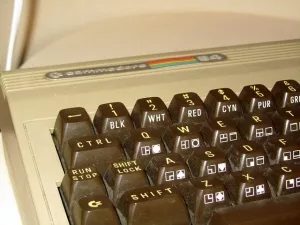
The chasm between 8-bit sprites and modern immersion
There is a specific kind of nostalgia bait in those documentary segments where modern kids are forced to stare at CRT monitors running early console software. The result is rarely wonder. Often, it is confusion. Or boredom. The gaming industry has undergone a seismic shift over the last fifty years, one so vast that the technical achievements of the 1970s and 80s would be dismissed as unplayable glitches if they were pitched as standalone products today.
The jump from simple pixel grids to complex, physics-based simulations is not just about graphics. It is about architecture, input latency, and user expectation.
Consider the hardware. Early systems relied on fixed logic gates and limited RAM. You did not “render” a scene; you moved a sprite across a background color. Today’s engines calculate light refraction in real-time. The difference is not just scale. It is fundamental.
And the evolution has not stalled. If anything, it is accelerating into harder, more expensive territory. Take virtual reality headsets. They are not just screens you strap to your face. They require low-latency tracking, high-refresh displays, and processing power that would have filled a room in the 1990s. The technology is still raw. The user base is still niche. But the direction is clear. We are moving away from 2D interaction toward spatial computing.
The old guard of gaming history is gone. Not because the games were bad, but because the medium outgrew its constraints. What remains is a reminder: progress in software is rarely linear. It is jagged. It is expensive. And it leaves the old standards far behind.